
Plants
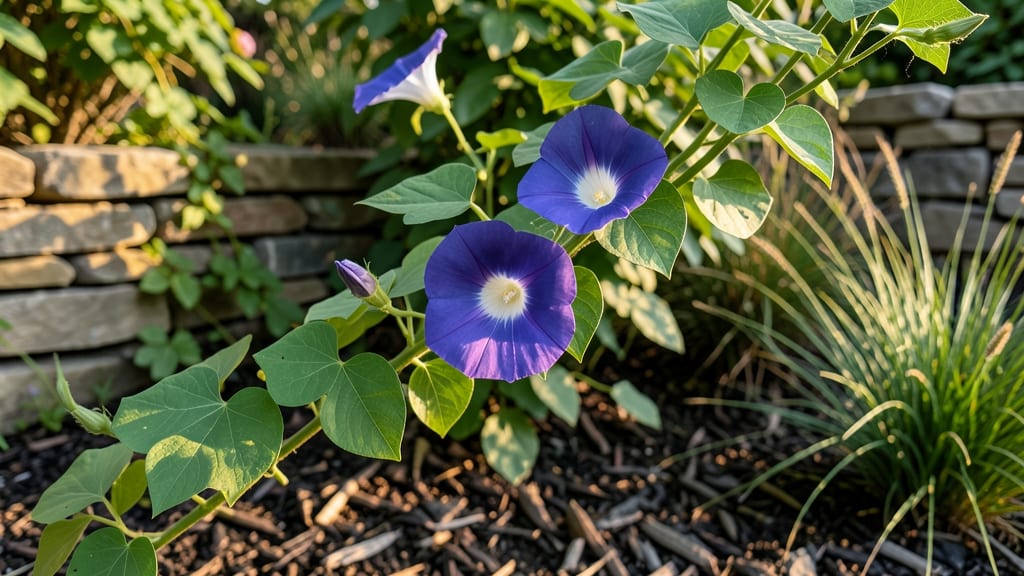
The three-lobed morning glory vine with its distinctive leaf climbs faster than you can say "vertical garden" — and it’s the secret weapon behind my most dramatic summer displays. 🌿 This isn’t just any vine; it’s the one with those heart-shaped leaves that catch the light like stained glass, transforming fences and trellises into living tapestries.
Here’s the thing—this vine thrives on neglect (well, mostly). It loves full sun but won’t sulk if you forget to water it once in a while.
The key is well-draining soil—think loamy or sandy mixes—and a sturdy trellis because, let’s be real, those vines can get 20+ feet long if you let them. Plant seeds directly in spring after frost, and watch them sprout in 7-10 days.
By midsummer, you’ll have blues, purples, and whites cascading overhead, with blooms that last just one day but open fresh every morning. The leaves stay lush all season, and if deer or rabbits bother your garden, this vine’s mild toxicity usually keeps them away.
(Yes, it’s safe for humans—just don’t eat the leaves like I almost did once.)
Pro tip: Deadhead spent blooms to encourage more flowers, and prune back leggy growth in early summer to keep it bushy. Works in containers too if you’re short on space—just give it something to climb. Ready to turn your yard into a fairy-tale vineyard?
📚 In This Guide
- What you need
- Instructions
- Tips and common mistakes
- Wrapping up and next steps
What you need
- ● Morning Glory Seeds (3-lobed leaf variety) – 10–20 seeds (or 1–2 starter plants if propagating). Look for Ipomoea tricolor or Ipomoea nil varieties.
- ● Vertical Trellis or Support Structure – A sturdy trellis (metal, wood, or PVC), fence, or obelisk (at least 4–6 feet tall). Ensure it’s non-toxic and can support climbing vines.
- ● Well-Draining Potting Mix – 5–10 gallons (depending on container size). Mix 50% garden soil, 30% compost, and 20% perlite or vermiculite for aeration.
- ● Containers or Garden Beds – If planting in pots, use containers with drainage holes (12–18 inches deep). For in-ground planting, ensure full sun exposure (6+ hours/day).
- ● Watering Can or Hose with Adjustable Nozzle – Morning glories love moisture but hate soggy roots!
- ● Balanced Fertilizer (10-10-10 or 5-5-5) – A slow-release granular fertilizer or liquid feed to boost growth.
- ● Mulch (Straw or Shredded Bark) – Helps retain moisture and suppress weeds.
- ● Plant Ties or Soft Twine – Gently guides vines upward until they latch onto the trellis.
- ● Organic Pest Control (Neem Oil or Ladybugs) – Preempts aphids or spider mites (common in humid climates).
- ● Decorative Accents – Solar-powered lights or hanging planters to elevate your vertical display!
Step-by-step guide to growing a thriving 3-Lobed morning glory vine
This vine grows with astonishing speed—watch it climb 6-10 feet per season with the right approach.
🌱 Step 1: Select the Perfect Planting Location
Choose a site with full sun exposure—at least 6-8 hours of direct sunlight daily. Morning glories thrive in warm climates but tolerate light frosts once established. I always plant mine near a sturdy trellis, fence, or pergola, as these vines can reach 10-15 feet with proper support.
Soil doesn't need to be rich, but it must drain well. Amend heavy clay with compost or coarse sand to prevent root rot. The key is to plant where the vine can spread unobstructed—crowded spaces stunt growth and reduce flowering. You'll see the most dramatic results when given room to climb vertically.
🌱 Step 2: Plant Seeds at the Right Time and Depth
Sow seeds directly in the garden after the last frost date when soil temperatures reach 60°F or warmer. These seeds germinate best in warm conditions—cold soil slows or prevents sprouting entirely. I like to plant mine in late spring, around 2-3 weeks after the frost-free date, for optimal growth.
Plant seeds ½ inch deep and 6-8 inches apart in rows spaced 18-24 inches apart. Press the soil gently over the seeds but don't bury them too deeply. Water thoroughly after planting to settle the soil and encourage even moisture. You'll see the first sprouts emerge in 7-14 days, depending on soil warmth.
💧 Step 3: Provide Consistent Water and Support
Keep the soil evenly moist but not soggy—morning glories are drought-tolerant once established, but young plants need consistent watering. I water deeply 2-3 times per week during dry spells, ensuring the top 6 inches of soil stays moist. Overwatering can lead to fungal issues, so always check soil moisture before watering.
Install a trellis or support structure as soon as you see the first tendrils appear. These vines wrap around supports naturally, but providing a sturdy frame early prevents tangled growth. I use a 6-foot tall metal trellis for my vines, and within 4-6 weeks, you'll see the first blooms climbing toward the top.
☀️ Step 4: Encourage Vigorous Growth and Blooming
Morning glories grow best in warm temperatures between 70-85°F. If your summers are hotter, provide afternoon shade to prevent wilting. The more sunlight the vine receives, the more abundant the blooms will be. You'll notice the most vibrant flowers when the plant gets full sun exposure.
Fertilize lightly with a balanced, water-soluble fertilizer (10-10-10) every 4-6 weeks during the growing season. Too much fertilizer can reduce flowering, so I use it sparingly. Prune back leggy growth in early summer to encourage bushier, more productive vines. You'll see a surge in new growth and blooms within 2-3 weeks of pruning.
✂️ Step 5: Harvest and Maintain for Next Season
Harvest seeds from dried flower pods in late summer or early fall. Allow the pods to turn brown and dry on the vine before collecting. I like to save seeds from the healthiest plants for next year's garden. Store seeds in a cool, dry place until spring planting.
After the first frost, the vine will die back naturally. Cut the stems down to the ground in late fall or early winter. The roots will remain dormant until spring, ready to produce new growth when temperatures warm. With proper care, your morning glory will return year after year, climbing faster and blooming more abundantly each season.
Tips & tricks for perfect morning glory 3-Lobed leaf vine growth
These insider insights will help you coax even more dramatic growth from your fast-climbing morning glory vine.
Sunlight Secret: While the instructions call for 6-8 hours of sunlight, I've found that morning glories actually thrive with 8-10 hours when possible—especially in cooler climates. The key is to position your trellis where the vine gets morning sun (which warms the soil) and afternoon shade if temperatures exceed 85°F. I've seen vines grow twice as fast when given this extended light exposure without afternoon heat stress.
Soil Prep Strategy: Before planting, I always mix in a handful of worm castings with the compost recommendation. This adds beneficial microbes that help the young roots establish faster—critical since morning glories grow so quickly. The castings also improve water retention in the top 6 inches where those roots will spread most aggressively. Think of it as giving your vine a head start on its 6-10 foot climb.
Support System Hack: Don't wait until you see tendrils to install your trellis! I recommend setting up your support structure at planting time and loosely tying the emerging shoots to it as they grow. This prevents the vine from developing tangled, gnarled growth patterns that make pruning difficult later. For maximum vertical growth, I use a spiral trellis design that guides the vine upward more efficiently than standard mesh.
Watering Wisdom: The 2-3 times per week recommendation works well, but I've found that morning watering is more effective than evening. Watering in the morning allows the foliage to dry completely by night, reducing fungal risks. During the critical 4-6 week bloom period, I increase watering to every other day if the top 6 inches of soil feel dry to the touch—this supports the rapid growth rate while maintaining that vibrant flowering.
Pro Tips for Morning Glory 3 Lobed Leaf Vine
- These insider insights will help you coax even more dramatic growth from your fast-climbing morning glory vine.
- Sunlight Secret: While the instructions call for 6-8 hours of sunlight, I've found that morning glories actually thri...
- Soil Prep Strategy: Before planting, I always mix in a handful of worm castings with the compost recommendation. This...
Frequently asked questions
Got questions about growing and caring for the morning glory 3-lobed leaf vine? You’re not alone! Here are some of the most common queries—plus quick, practical answers to help you cultivate this stunning climber with confidence.
How fast does the 3-lobed morning glory vine grow, and how tall can it get?
The 3-lobed morning glory (Ipomoea triloba) is a fast climber, often shooting up 6–10 feet per season with proper support (like a trellis or fence). Given ideal conditions—full sun, consistent moisture, and regular pruning—it can reach 15–20 feet in a single growing season! Pro tip: Train young vines early to avoid tangled growth.
Is this vine annual or perennial, and will it come back every year?
In most U.S. climates (zones 3–10), the 3-lobed morning glory is tender perennial but often treated as an annual because it dies back in frost. However, if planted in well-draining soil and mulched heavily, it may resprout the following spring! In colder zones, save seeds or dig up tubers in fall for overwintering indoors.
What pests or diseases should I watch for, and how do I prevent them?
Common issues include:
- Aphids or spider mites: Spray vines with neem oil or introduce ladybugs.
- Powdery mildew (from humidity): Improve airflow and avoid overhead watering.
- Root rot: Ensure well-draining soil and don’t overwater.
Prevention tip: Rotate crops yearly and remove debris after the season to deter pests.
Can I grow 3-lobed morning glory in containers, or does it need a garden bed?
Yes! This vine thrives in large containers (15+ gallons) with drainage holes and a support trellis. Use a lightweight potting mix and fertilize monthly with a balanced liquid fertilizer. Just be ready to winter-over tubers indoors in colder climates. Bonus: Container growth limits spread and makes pruning easier!
Why aren’t my morning glory flowers opening, or are they falling off quickly?
Several factors can cause this:
- Too much shade: Morning glories need 6+ hours of direct sun for blooms.
- Overwatering or poor drainage: Root stress = fewer flowers.
- Lack of fertilization: Add a low-nitrogen, high-phosphorus fertilizer (like 5-10-10) at planting.
- Heat stress: In extreme heat, vines may bolt (flower quickly) and die back.
Quick fix: Prune leggy vines to encourage bushier growth and more blooms!
Wrapping up and next steps
The morning glory 3-lobed leaf vine is a stunning, low-maintenance addition to any vertical garden, offering fast growth, vibrant blooms, and effortless beauty. Whether you’re a seasoned gardener or just starting, this vine brings color and life to walls, trellises, or fences with minimal fuss.
Ready to transform your space? Start by gathering your supplies, choosing the right location, and watch your garden climb to new heights! 🌿✨
- Next step: Pick a sunny spot, prep your trellis, and plant your seeds—your vertical garden awaits!