
Flowers
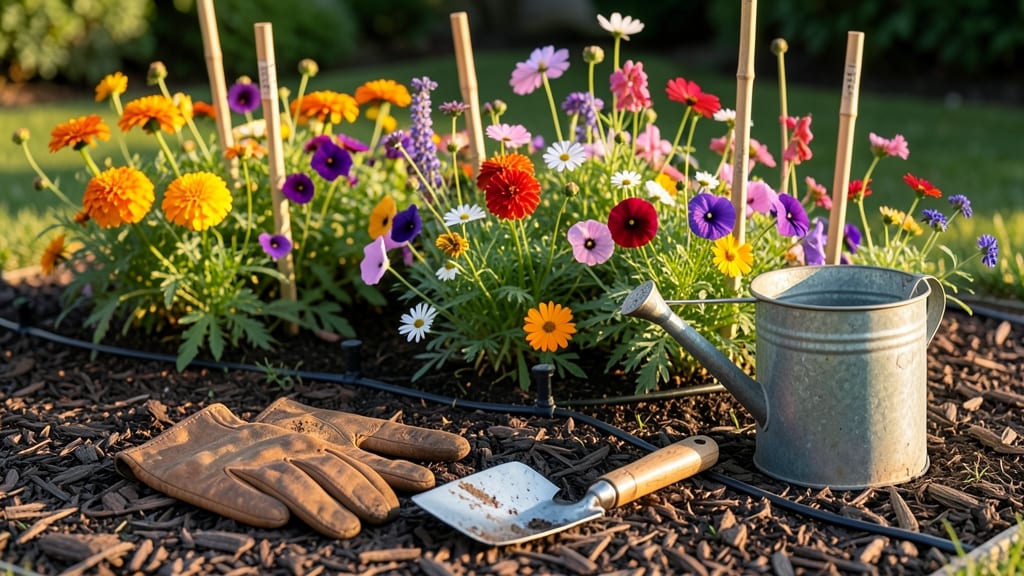
Your flower bed could bloom with year-round color—not just summer—if you plan it right. 🌸 Strategic annual rotation means no bare spots, no color gaps, and a garden that looks effortlessly planned.
I designed my first rotating bed after realizing my summer-only blooms left me with muddy patches from fall to spring. The secret is grouping plants by height, color, and bloom time.
Start with a sun-loving backbone like zinnias or marigolds for summer, then layer in pansies and snapdragons for cooler months. Even a small bed (3' x 6') can hold 20+ plants if you space them right—think 6 inches apart for medium flowers, 12 inches for tall varieties.
By late fall, you’ll have a bed that stays vibrant until frost, then pops back to life in spring with sweet alyssum and lobelia. The best part? You’ll spend less time deadheading and more time admiring the show.
This method works for any climate, from hot-summer zones to mild coastal areas. Let’s sketch out your first rotation plan!
📚 In This Guide
- What you need
- Instructions
- Tips and common mistakes
- Wrapping up and next steps
What you need
- ● Annual flowers: Choose 3-5 varieties for seasonal rotation (e.g., petunias, zinnias, marigolds, impatiens, and snapdragons). Plan for 10-15 plants per square foot for full coverage.
- ● High-quality potting soil: 1 cubic yard per 100 sq. ft. of bed (amend with compost for nutrient-rich soil).
- ● Organic mulch: 2-3 inches (e.g., shredded bark or pine straw) to retain moisture and suppress weeds.
- ● Slow-release fertilizer: 10-10-10 or 14-14-14 (apply per package instructions, typically 1 lb. per 100 sq. ft.).
- ● Garden tools: Hand trowel or transplanting spade
- ● Pruners (for deadheading)
- ● Garden fork (for soil aeration)
- ● Wheelbarrow (for hauling soil/mulch)
- ● Measuring tools: Tape measure, stakes, and string (to mark bed layout).
- ● Watering supplies: Hose with adjustable nozzle or drip irrigation system.
- ○ Optional (but helpful!): Soil pH test kit (aim for 6.0-7.0 for most annuals)
- ● Epsom salt (for magnesium boost, if needed)
- ● Garden gloves and knee pads (for comfort!)
How to design annual flower beds that bloom all season
Here’s the method I’ve used for years to keep flower beds vibrant from spring through fall—no gaps, no guesswork.
🌿 Step 1: Plan Your Color and Bloom Timeline
Start by sketching your flower bed layout, dividing it into four zones (one for each season). I like to assign early spring to cool-season annuals like pansies or snapdragons, then transition to heat-lovers like zinnias and marigolds by summer. Write down bloom times for each variety—this ensures you’ll always have color.
Use a simple color wheel to mix complementary hues (reds with blues, yellows with purples). This creates visual harmony while keeping the bed lively. For example, I pair salvias (purple) with calibrachoas (pink) for a cohesive look. Pro tip: Add a focal plant—like a tall delphinium—at the back to anchor the design.
📝 Step 2: Choose Plants for Continuous Bloom
Select annuals with overlapping bloom periods. For instance, petunias (spring to frost) pair well with cosmos (summer to fall). I avoid single-season plants—they leave bare spots. Instead, I opt for geraniums (spring to summer) and celosia (summer to fall) to bridge gaps.
Check plant tags for height and spread to avoid overcrowding. Place tall varieties (like sunflowers) at the back, medium-height (like zinnias) in the middle, and trailing plants (like lobelia) at the front. This creates depth and prevents leggy growth from shading smaller flowers.
✂️ Step 3: Prepare the Soil and Plant Strategically
Loosen the soil to a depth of 12 inches with a garden fork, then mix in 2 inches of compost to improve drainage and fertility. Annuals thrive in well-draining soil—amend heavy clay with sand or perlite if needed. I like to add a slow-release fertilizer (like 10-10-10) at planting to feed roots for weeks.
Dig holes twice as wide as the root ball and plant at the same depth as the container. Space plants according to their mature size—6-12 inches apart for most annuals. Water deeply after planting to settle the soil and remove air pockets around roots.
💧 Step 4: Water and Maintain for Long-Lasting Blooms
Water deeply 2-3 times per week (more in extreme heat) to encourage strong root growth. I water in the early morning to reduce evaporation and fungal diseases. Use a soaker hose or drip irrigation to deliver moisture at the base—this prevents wilted leaves from overhead sprinklers.
Deadhead spent blooms weekly to encourage more flowers. I pinch off faded petunias and zinnias with my fingers—no tools needed. For aggressive growers like cosmos, I trim back leggy stems by one-third to promote bushier growth. Mulch with 2 inches of shredded bark to retain moisture and suppress weeds.
☀️ Step 5: Rotate and Refresh for Next Season
By late fall, some annuals will fade. I mark underperformers (like those that flopped or attracted pests) and replace them with winter pansies or kale for holiday color. In early spring, remove dead plants, till the soil, and add fresh compost before replanting.
Rotate plant families yearly to prevent soil-borne diseases. For example, if I planted tomatoes in a raised bed one year, I’ll skip solanaceae (like petunias) the next. Instead, I bring in new annuals like impatiens or sweet alyssum to refresh the bed.
Tips & tricks for perfect annual flower beds
Real talk: The secret to flawless seasonal blooms isn't just picking pretty flowers—it's the details that keep them thriving. Here's what nobody tells you about maintaining vibrant flower beds all year.
Seasonal Transition Strategy: When planning your four seasonal zones in Step 1, I like to overlap bloom times by 2-3 weeks between seasons. For example, plant pansies (early spring) alongside snapdragons (late spring) so you're not left with bare spots. This creates a seamless color transition that keeps your beds looking full. The key is to research each plant's exact bloom window—don't just guess based on the season.
Soil Prep Secret: In Step 3, when you're mixing in that 2 inches of compost, don't stop there. I add a handful of worm castings (optional but game-changing) to the bottom of each planting hole. The castings provide immediate nutrients while improving soil structure. For clay-heavy soils, mix in 1 part perlite to 3 parts soil to prevent compaction—this makes all the difference for root health.
Watering Wisdom: The 2-3 times per week guideline in Step 4 works, but timing matters more than frequency. I set up a simple rain gauge and only water when I've had less than 1 inch of rain in the past week. For containers, I use self-watering pots with moisture sensors—these prevent both underwatering and root rot. And always water at the base, not overhead, to keep foliage dry and reduce fungal diseases.
Deadheading Done Right: That weekly deadheading in Step 4 isn't just about looks—it's about encouraging more flowers. For petunias and zinnias, I use a pair of clean scissors to cut stems just above a set of leaves (not at the base). For cosmos, I actually leave some spent blooms to self-seed—they'll come back stronger next year. And here's the thing: if you see buds forming but no blooms, your plants might need more sunlight or phosphorus-rich fertilizer.
Pro Tips for Annual Flower Bed Plans
- Real talk: The secret to flawless seasonal blooms isn't just picking pretty flowers—it's the details that keep them t...
- Seasonal Transition Strategy: When planning your four seasonal zones in Step 1, I like to overlap bloom times by 2-3 ...
- Soil Prep Secret: In Step 3, when you're mixing in that 2 inches of compost, don't stop there. I add a handful of wor...
Frequently asked questions
Got questions about annual flower bed plans? You’re not alone!
Here are answers to the most common ones to help you plan with confidence.
When is the best time to plant annuals for continuous blooms?
For year-round color, stagger plantings every 4–6 weeks starting in early spring (after the last frost). In warm climates, begin in late winter; in cooler zones, wait until late spring. This ensures overlapping bloom times and minimizes gaps. Check your USDA zone for precise timing!
Are annual flower beds more expensive than perennials?
Upfront costs can be higher since annuals need yearly replanting, but they’re budget-friendly long-term. Opt for seed packets (cheaper than transplants) or mix high-cost showstoppers (like dahlias) with affordable fillers (like marigolds or zinnias). Plus, annuals give you total design control each season!
How do I keep pests and diseases from ruining my flower beds?
Prevention is key! Start with healthy soil (rich in compost) and space plants for airflow. Use neem oil or insecticidal soap for pests, and remove diseased leaves immediately. Diversity matters: Avoid planting the same species in large blocks to deter pests. Try companion planting—like marigolds with tomatoes—to naturally repel bugs.
Can I reuse the same soil for annuals year after year?
While you can, it’s not ideal. Annuals deplete nutrients quickly, so refresh soil with 2–3 inches of compost or aged manure before replanting. Test soil pH annually (aim for 6.0–7.0 for most annuals). If you notice stunted growth or yellowing, it’s time to amend!
What’s the easiest way to design a low-maintenance annual bed?
Focus on three layers:
- Thrillers (tall centerpieces like snapdragons)
- Fillers (medium-height blooms like petunias)
- Spillers (trailing plants like lobelia)
Wrapping up and next steps
Creating a stunning annual flower bed doesn’t have to be overwhelming—with the right strategic rotation and seasonal planning, you can enjoy vibrant blooms all year long! 🌸 By mixing perennials, biennials, and annuals, you’ll save time, reduce waste, and keep your garden thriving with minimal effort.
Whether you’re a beginner or a seasoned gardener, these plans make it easy to transform your space into a colorful oasis.
Now that you’re inspired, grab your gardening gloves and start sketching your dream flower bed! Pick a few plants from our rotation guide, mark your calendar for planting dates, and watch your garden burst into life. Happy gardening—your future self (and pollinators!) will thank you. 🌻