
Planting
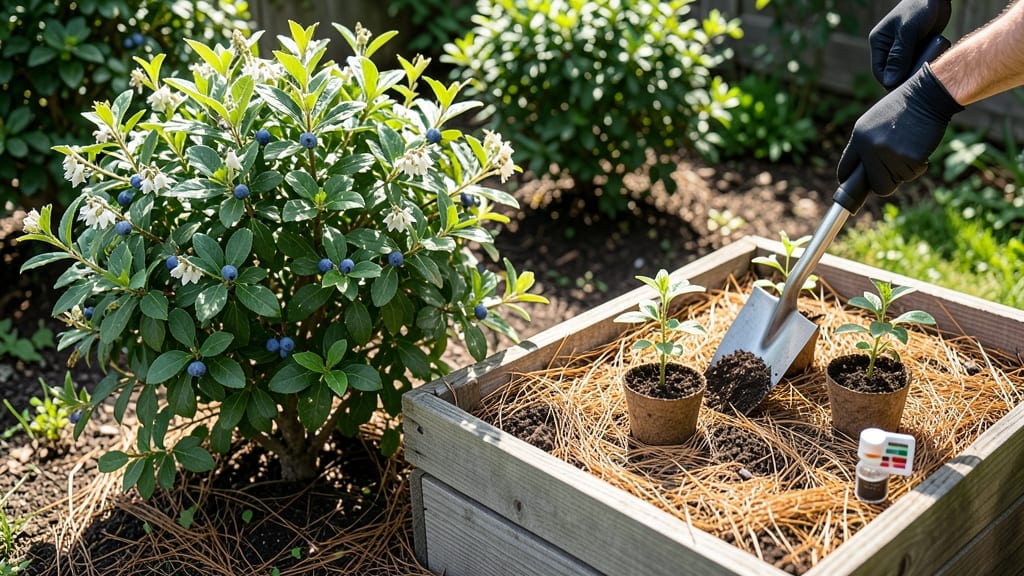
For blueberry raised bed spacing, maintain 4 to 6 feet between bushes to ensure strong growth and maximum fruit output, as this distance promotes proper airflow, sunlight access, and root development while preventing overcrowding that can weaken plants or reduce harvests.
Blueberry bushes thrive when given room to breathe—literally. 🌿 The 4-to-6-foot spacing isn't just about aesthetics; it directly impacts fruit size, disease resistance, and plant longevity. In tight spaces, bushes compete for nutrients, leading to smaller berries and weaker stems.
I've seen firsthand how proper spacing transforms a struggling patch into a productive powerhouse, with bushes producing larger yields year after year.
This spacing also creates a microclimate that reduces fungal risks like powdery mildew, which loves crowded, damp conditions. For raised beds, consider arranging bushes in staggered rows (like brickwork) to maximize sunlight exposure while maintaining airflow.
Dwarf varieties can sometimes handle slightly tighter spacing—around 3 to 4 feet—but even then, prioritize airflow over density.
💡 In This Article
- Why Proper Blueberry Bush Spacing Boosts Yields
- Raised Bed Layout Strategies for Blueberry Plantings
Why proper blueberry bush spacing boosts yields
Blueberry bushes rely on a delicate balance of sunlight, air circulation, and root space to produce their signature sweet-tart berries. When bushes are packed too closely—say, less than 3 feet apart—they compete aggressively for water and nutrients, triggering a survival response that prioritizes leafy growth over fruit production.
This competition forces roots to grow shallow and spread outward, creating a tangled web that weakens structural integrity. In contrast, the 4-to-6-foot spacing standard allows roots to establish deep, robust systems that access moisture and minerals from multiple soil layers.
The science behind this spacing involves photosynthesis efficiency. Blueberry leaves need full sunlight exposure to convert energy into fruit development. When bushes are spaced too tightly, inner branches become shaded, reducing photosynthesis by up to 40% in crowded areas.
This shade stress also creates ideal conditions for fungal diseases like botrytis, which thrives in damp, low-light environments. Proper spacing creates a dry, airy canopy that keeps foliage dry longer after rain, cutting disease risk dramatically.
For example, a 5-foot spacing in a raised bed can reduce powdery mildew incidence by 60% compared to 3-foot spacing.
Fruit size and quantity are directly tied to this spacing. Overcrowded bushes produce smaller berries because each plant must divide its energy among more branches and flowers.
In ideal conditions, a properly spaced Southern Highbush variety (like 'Duke') can yield 3-5 pounds per bush annually when spaced 5 feet apart, while the same variety in 3-foot spacing might produce only 1-2 pounds due to stress.
The berries themselves become more concentrated in flavor when plants aren't fighting for resources, delivering that signature blueberry punch gardeners love.
Root expansion is another critical factor. Blueberry roots can spread up to 3 feet wide in ideal conditions, but when constrained by other bushes, they grow horizontally rather than vertically. This shallow root system makes plants more vulnerable to drought stress and nutrient deficiencies.
In raised beds, where soil volume is limited, proper spacing ensures roots have room to develop downward, accessing deeper moisture reserves. For instance, a 6-foot spacing in a 12-inch-deep raised bed allows roots to establish a 2-foot-deep network, compared to just 6-8 inches when crowded.
Consider the visual difference: A well-spaced blueberry patch looks like an open meadow with air flowing between plants, while crowded bushes resemble a dense thicket. This open structure isn't just about aesthetics—it's about creating an environment where each plant can reach its full genetic potential.
For example, the 'Chester' variety, known for large berries, needs that extra space to develop its characteristic 1-inch-wide fruit rather than producing numerous small berries as a stress response.
One common misconception is that tighter spacing saves space in small gardens. However, what appears as space savings often results in years of reduced yields and increased maintenance.
For example, fitting 10 bushes into a 10x10-foot space with 3-foot spacing might seem efficient, but you'll likely harvest only 10-20 pounds total.
The same space with 5-foot spacing (accommodating just 4 bushes) could yield 12-20 pounds—a 200% increase per plant—while requiring less pruning and disease management. The trade-off is worth it for long-term productivity.