
Tools
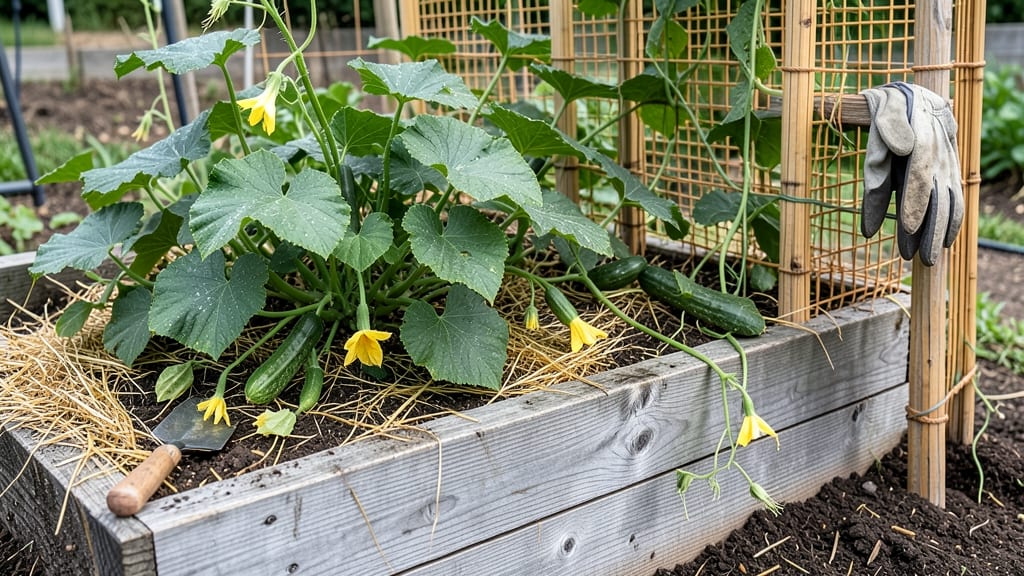
Growing cucumbers in a raised bed garden means more cucumbers, less work—if you use this vertical trellis trick. 🌱 I used to struggle with sprawling vines taking over my garden, but training them upward changed everything.
Now I get twice as many cucumbers in half the space, with cleaner fruit and fewer pests. The secret starts with well-draining soil mixed with compost (no soggy roots!) and a sturdy trellis that keeps vines off the ground.
Cucumbers love warmth, so wait until soil reaches 60°F before planting, and space them 12 inches apart for airflow. The trellis isn’t just for looks—it keeps fruit clean, reduces disease, and makes harvesting a breeze. By midsummer, you’ll be picking crisp, straight cucumbers instead of misshapen ones hiding under leaves.
The vertical growth also means less competition for nutrients, so your plants stay strong even in small raised beds. Plus, the trellis keeps squirrels and slugs from feasting on your harvest.
This method works for bush or vining varieties, and the same setup can double as a trellis for beans or peas later in the season. Ready to turn your raised bed into a cucumber powerhouse?
📚 In This Guide
- What you need
- Instructions
- Tips and common mistakes
- Wrapping up and next steps
What you need
- ● Raised bed garden: At least 4’ x 8’ (or larger) with 12–18” deep soil for optimal root growth. Wood, composite, or metal frames work well.
- ● High-quality soil: 60% topsoil (loamy, well-draining)
- ● 30% compost (aged, nutrient-rich)
- ● 10% perlite or vermiculite (for aeration)
- ● Cucumber seeds or seedlings: Choose bush-type or vining varieties (e.g., ‘Straight Eight,’ ‘Lemon Cucumber,’ or ‘Marketmore’). Start 4–6 seeds per bed or 2–3 seedlings if transplanting.
- ● Vertical trellis system: Tall T-posts (6–8 ft) or metal stakes (spaced 3–4 ft apart)
- ● Twine, jute twine, or nylon mesh (for weaving vines upward)
- ● OR pre-made cucumber trellis nets (e.g., 5’ x 10’ diamond mesh)
- ● Mulch: Straw or shredded leaves (2–3” thick) to retain moisture and suppress weeds.
- ● Drip irrigation or soaker hose: ¼” tubing with adjustable emitters (or a watering wand for smaller beds).
- ● Fertilizer: Balanced organic fertilizer (e.g., 10-10-10 or fish emulsion) at planting
- ● Compost tea or liquid kelp (mid-season boost)
- ● Pruning shears: Bypass-style (for trimming vines and harvesting).
- ● Row covers: Floating fabric to protect young plants from pests (remove when flowers appear).
- ● Cucumber cages: Wire or plastic (for compact varieties like ‘Bush Champion’).
- ● pH test kit: Aim for 6.0–6.8 (adjust with lime or sulfur if needed).
- ● Companion plants: Basil, radishes, or marigolds to deter pests and improve flavor.
- ● Harvest basket: A mesh bag or crate to keep cucumbers off the ground and organized.
Step-by-Step instructions for growing cucumbers in a raised bed
Here’s how to maximize your harvest with minimal space using my vertical trellis method.
🌱 Step 1: Prepare the Raised Bed for Planting
Fill your raised bed with a mix of 50% high-quality potting soil and 50% compost to create a nutrient-rich foundation. I like to add a handful of slow-release fertilizer (like 10-10-10) mixed into the top 6 inches of soil—this gives cucumbers a steady supply of nutrients as they grow. Fluff the soil with a garden fork to loosen it, breaking up any clumps so roots can spread easily.
Cucumbers thrive in warm soil (at least 60°F). If planting early in the season, consider using a soil warming mat for the first few weeks. Test the soil depth with your finger—it should feel moist but not soggy down to 2 inches. This ensures roots get the right balance of hydration without drowning.
☀️ Step 2: Install the Vertical Trellis System
Before planting, set up your trellis. I use 4-foot tall bamboo stakes placed at each corner of the bed, connected with twine or jute twine stretched horizontally every 12 inches. This creates a sturdy grid for vines to climb. The key is securing the twine tightly—if it sags, cucumbers will flop instead of growing upward.
Leave 12-18 inches of space between each cucumber plant along the bed’s edge. This prevents overcrowding and makes harvesting easier. If you’re planting 4 cucumber plants (as recommended for a 4’x4’ bed), space them evenly. The trellis will support their weight as they grow, keeping fruits off the ground and reducing disease risk.
🌿 Step 3: Plant Seeds or Transplants
If starting from seed, plant 2-3 seeds per hill, 1 inch deep, and 12 inches apart. Press the soil gently around the seeds to ensure good contact—this helps roots anchor quickly. If using transplants, dig a hole twice as wide as the root ball and place the plant so the top of the roots sits just below soil level. Water deeply right after planting to settle the soil.
Here’s the thing—cucumbers grow fast, but they need full sun (6-8 hours daily) to produce well. If your bed gets afternoon shade, focus on early-maturing varieties like ‘Straight Eight’ or ‘Marketmore’. You’ll know they’re happy when vines start climbing the trellis within 7-10 days—that’s your first sign of success.
💧 Step 4: Water and Feed for Maximum Growth
Water cucumbers deeply 2-3 times per week, aiming for 1-2 inches of water total. I use a soaker hose to deliver moisture slowly at the base—this prevents wetting the leaves, which can cause fungal diseases. Check the soil 1 inch below the surface before watering; if it’s dry, it’s time. Overwatering leads to weak vines and poor fruit set.
When vines reach the top of the trellis (about 4-6 weeks after planting), start side-dressing with compost or a balanced liquid fertilizer every 2-3 weeks. You’ll see new leaves and tendrils forming—this means the plant is putting energy into growth. Prune any yellowing leaves immediately; they’re a sign of stress or disease and should be removed to keep the plant focused on producing fruit.
✂️ Step 5: Train Vines and Harvest Regularly
Gently guide the main vine up the trellis, tying it to the twine with soft plant ties if needed. Let 2-3 side vines grow from each main stem—they’ll produce the bulk of your cucumbers. Remove any suckers (small shoots growing from the stem) to keep energy flowing to the main plant. This pruning step is crucial; unchecked vines can become tangled and produce smaller, lower-quality fruit.
Harvest cucumbers when they’re 6-8 inches long, depending on the variety. I check the bed every 2-3 days—the sooner you pick, the more the plant will produce. Use pruning shears or a sharp knife to cut the fruit from the vine, leaving a small stem attached. This prevents damage to the plant and encourages more flowers (and thus more cucumbers) to form.
Tips & tricks for perfect vertical cucumber growth
These simple tricks will help you transform your raised bed into a thriving cucumber garden with minimal effort.
Soil Preparation Secret: Don't skimp on the compost-to-soil ratio. I've found that adding a thin layer of worm castings to the top inch of soil before planting gives cucumbers an extra nutrient boost right when they need it most. This helps roots establish faster, especially in Step 1 when you're mixing your 50-50 blend. The castings also improve soil structure, which is crucial for those deep roots cucumbers develop.
Trellis Stability Tip: When setting up your vertical trellis in Step 2, I recommend using three stakes instead of four for a 4'x4' bed. Place them at 12-inch intervals along one long side and connect them with your twine. This creates a stronger diagonal support that won't sag as cucumber vines grow heavier. The key is to pull the twine taut before planting—you can even use a rubber band to secure it temporarily while you work.
Watering Wisdom: The 2-3 times per week watering schedule in Step 4 works perfectly, but here's what I've learned: water in the early morning (between 6-9 AM) rather than evening. This gives leaves time to dry completely before nightfall, which dramatically reduces powdery mildew risk. I also check for moisture by pushing my finger into the soil—if it's damp only at the very surface, it's time to water again. This method prevents overwatering while keeping roots consistently moist.
Harvesting Hack: For Step 5, I've found that harvesting every 2 days instead of 3 makes a noticeable difference in yield. The plant responds to frequent picking by producing more flowers, which means more potential cucumbers. When you harvest, always cut with a clean knife and leave that small stem—this prevents disease entry points and encourages the plant to keep producing. I keep a small bucket of water nearby to rinse off any dirt, which makes the cucumbers look fresher and lasts longer in storage.
Pro Tips for Growing Cucumbers In A Raised Bed Garden
- These simple tricks will help you transform your raised bed into a thriving cucumber garden with minimal effort.
- Soil Preparation Secret: Don't skimp on the compost-to-soil ratio.
- Trellis Stability Tip: When setting up your vertical trellis in Step 2, I recommend using three stakes instead of four for a 4'x4' bed.
Frequently asked questions
Got questions about growing cucumbers in a raised bed?
Here are answers to the most common ones—plus a few pro tips to keep your vines thriving!
1. How deep should my raised bed be for cucumbers?
Cucumbers need at least 12 inches of soil depth to spread roots comfortably. If your bed is shallower, amend with compost or organic matter to improve drainage and nutrients. Deeper beds (18+ inches) are ideal for varieties with long taproots, like some heirloom types.
2. When is the best time to plant cucumbers in a raised bed?
Wait until after the last frost and soil temps hit 60°F+ (use a soil thermometer to check!). For cooler climates, start seeds indoors 3–4 weeks before transplanting. In warmer zones, direct-sow in early spring or late summer to avoid heat stress.
3. Can I grow cucumbers without a trellis in a raised bed?
Yes, but expect smaller yields and more disease risk. Bush varieties (like ‘Bush Champion’) work in compact beds, but vining types (like ‘Straight Eight’) thrive with support. If skipping a trellis, leave 3–4 feet of space per plant and mulch heavily to prevent sprawl and rot.
4. Why are my cucumber leaves yellowing or curling?
Yellow leaves often signal overwatering, nutrient deficiency (like nitrogen), or pests (e.g., cucumber beetles). Check soil moisture—cucumbers hate soggy roots. Curling? Inspect undersides for spider mites or aphids. Spray with neem oil or introduce beneficial insects like ladybugs for organic control.
5. Can I extend the cucumber season in a raised bed?
Use row covers in early spring/fall to protect from frost, or plant heat-tolerant varieties (like ‘Armenian’ or ‘Lemon’) for summer. In cold climates, try black plastic mulch to warm soil faster. Harvest frequently to encourage continuous production!
Bonus Pro Tip:
Mix compost + worm castings into your raised bed soil before planting. Cucumbers are heavy feeders, and this combo boosts growth and flavor without harsh chemicals.
Wrapping up and next steps
Growing cucumbers in a raised bed garden with a vertical trellis isn’t just possible—it’s a game-changer for maximizing space and boosting yields! 🌱 With the right soil, support, and care, you’ll enjoy crisp, abundant harvests while keeping pests at bay.
Whether you’re a beginner or a seasoned gardener, this method makes cucumber growing easier and more rewarding.
Ready to dig in? Start by sketching your raised bed layout, gathering your supplies, and planting your first seeds. Your future harvests are waiting—let’s grow them together! 🌿