
Light Requirements
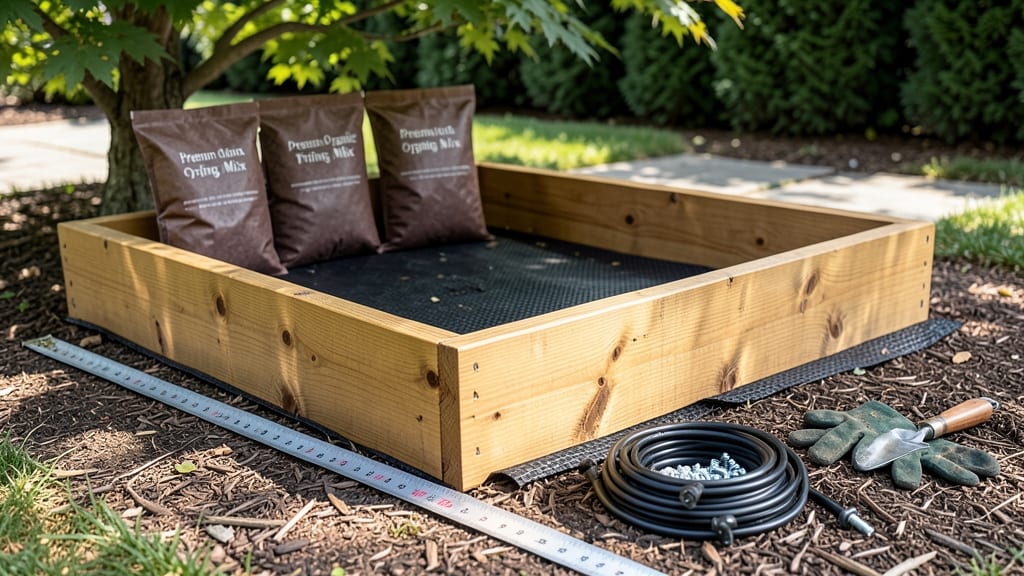
Building a raised garden bed typically costs between $100 and $1,200+, with prices depending on size, materials, and whether you DIY or buy a pre-made kit. A standard 4x4-foot cedar bed averages $300–$600, while larger 8x4-foot kits range from $500–$1,200, and budget-friendly DIY lumber builds start as low as $50–$200.
Your total investment will depend on material choices—cedar and redwood are pricier but last longer, while pressure-treated lumber cuts costs but may need replacement sooner. 💰 Liner costs add up too: landscape fabric runs $1–$3 per square foot, while hardware cloth is sturdier but pricier.
I’ve seen DIY builders save hundreds by using reclaimed wood or skipping liners in well-drained soil.
Size matters more than you’d think: a 4x8-foot bed costs nearly double a 4x4 due to material volume, but the per-square-foot price drops significantly.
For example, an 8x8-foot bed might cost $800–$1,500—but spreading that over 64 square feet brings the unit price down to $12–$23 per square foot, making it a smarter long-term choice for serious gardeners.
💡 In This Article
- Cost Breakdown: Factors Affecting Raised Garden Bed Pricing
- Budget-Friendly Raised Garden Bed Options by Size
Cost breakdown: factors affecting raised garden bed pricing
Material choice is the single biggest cost driver in raised garden beds. Cedar and redwood, prized for their natural rot resistance and aromatic qualities, typically cost $10–$20 per board foot—about 3x more than pressure-treated pine ($3–$7 per board foot).
This premium pays off in longevity: cedar beds last 10–15 years without treatment, while pressure-treated wood may need replacement in 5–7 years due to chemical breakdown. Composite lumber bridges this gap with $15–$25 per board foot pricing but offers 20+ years of durability.
Size impacts costs through material volume and structural requirements. A 4x4-foot bed uses roughly 12 linear feet of lumber (4 sides × 4 feet), while an 8x8-foot bed needs 32 linear feet—more than double the material.
However, the per-square-foot cost decreases dramatically: a 4x4-foot cedar bed costs $15–$25 per square foot, while an 8x8-foot drops to $10–$18 per square foot. This economies-of-scale effect makes larger beds far more cost-efficient for serious gardeners.
Liners add another layer of expense that varies by climate and soil type. Landscape fabric ($1–$3 per square foot) prevents weeds and soil loss but degrades in 3–5 years, while hardware cloth ($2–$5 per square foot) lasts 10+ years and deters burrowing pests.
In well-drained soils, many gardeners skip liners entirely—saving $20–$100—but risk soil erosion and weed competition. The trade-off becomes clear when calculating long-term maintenance costs.
Regional lumber prices create 20–50% variations in total costs. For example, cedar in the Pacific Northwest costs $12–$18 per board foot due to local mills, while the same wood in the Southeast may run $18–$25 per board foot due to transportation costs.
Labor adds $50–$150 per hour if hiring a pro, making DIY the clear winner for budget builds. Even with tool rental costs ($30–$80 per day for a circular saw or nail gun), the savings often exceed $200–$500 compared to pre-built kits.
Don't overlook hidden costs like soil replenishment. Quality garden soil costs $30–$60 per cubic yard, and a 4x4-foot bed (12" deep) needs 1–2 cubic yards—adding $30–$120 to startup costs.
Over time, organic matter depletion means you'll need to top-dress annually with compost ($10–$30 per bag), turning your bed into a long-term investment rather than a one-time purchase.
For the most budget-friendly approach, consider repurposed materials: old wine barrels ($50–$150), cinder blocks ($1–$3 each), or even stacked bricks ($2–$5 per square foot). These alternatives cut initial costs by 50–70% while still providing excellent drainage and weed suppression.
The key is balancing upfront savings with long-term performance—especially in rainy climates where poor drainage can kill plants.