
Tools
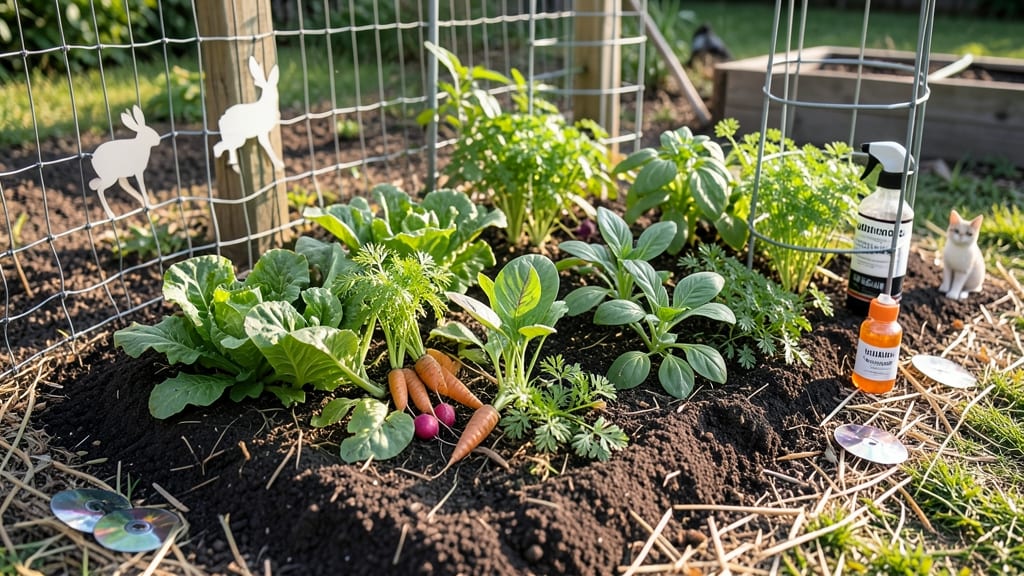
How to protect your garden bed from animals—it’s the difference between a buffet and a fortress. 🌱 The right combination of physical protection and smart deterrents can turn your garden from a snack bar into a safe haven. I’ve tested everything from chicken wire to commercial fencing, and some methods work better than others for different critters.
Start with a sturdy hardware cloth barrier buried 6 inches deep—this stops digging rabbits and gophers. Add repellent plants like garlic or marigolds around the edges, and sprinkle hot pepper spray (mild enough for pets) on leaves.
For deer, a 4-foot-tall fence with inward-facing spikes at the top is the gold standard—no animal can jump or climb over it.
You’ll see immediate results: no more chewed lettuce, no vanished seedlings overnight. The best part? These methods work year-round, from early spring planting to late fall harvests. Even my neighbor’s raccoons gave up after trying to raid my protected beds.
Adapt the approach based on your biggest pests—rodents need buried wire, while birds respond to reflective tape or netting. The key is layering defenses so no single creature can break through. Your garden will thrive without a single casualty.
📚 In This Guide
- What you need
- Instructions
- Tips and common mistakes
- Wrapping up and next steps
What you need
- ● Hardware cloth or wire mesh (1/4" to 1/2" grid size) – Required for fences or underground barriers (e.g., 4' x 100' roll).
- ● T-posts or sturdy stakes (6" diameter, 3-4' tall) – For securing fences; 1 stake per 2-3 feet of perimeter.
- ● Garden twine or zip ties – To attach mesh to stakes or fencing.
- ● Heavy-duty staples or fence staples – For securing mesh to wood or posts.
- ● Wooden boards or lumber (2x4s or 1x6s) – For DIY raised beds or frame barriers (6-12" height recommended).
- ○ Landscape fabric or burlap – Optional but helpful for covering soil and deterring burrowing pests.
- ● Commercial animal repellents (e.g., sprays with pepper or predator urine) – For non-physical deterrents.
- ○ Motion-activated sprinklers – Optional but effective for larger areas (e.g., 1-2 units for a 10' x 10' bed).
- ● Hot pepper wax or cayenne pepper – Mix with water for a natural spray.
- ● Reflective tape or old CDs – Hang near the garden to scare off birds and small mammals.
- ● Chicken wire (for temporary fixes) – Less durable but works in a pinch.
- ● Plant-based deterrents (e.g., marigolds, garlic, or onions) – Interplant to confuse pests naturally.
Step-by-step instructions for creating animal-resistant garden barriers
Here’s my battle-tested method for keeping critters out without sacrificing plant health or aesthetics.
🪴 Step 1: Assess Your Garden’s Weak Points
Start by identifying where animals enter most frequently. Check for burrow entrances, chewed plants, or disturbed soil around the bed’s edges. I always look for signs like claw marks on stems, scattered seeds, or fresh droppings near the perimeter—these reveal their entry points. Focus on these hotspots first, as they’re the most vulnerable.
Next, observe animal behavior patterns. Rabbits and deer typically hop over low barriers, while squirrels dig beneath them. If you’re dealing with burrowing pests like gophers, you’ll need a different approach than for surface grazers. Note which plants are most targeted—tender greens and young seedlings are usually the first to go.
🌱 Step 2: Choose the Right Barrier Material
For above-ground pests like rabbits and deer, hardware cloth (1/4-inch or 1/2-inch mesh) is my go-to. It’s sturdy, lasts years, and won’t degrade like plastic mesh. Bury the bottom edge 6 inches deep to prevent digging predators from tunneling underneath. If you’re protecting from birds or small mammals, fine mesh netting (1/4-inch or smaller) stretched over hoops or frames works well.
For burrowing animals like gophers or moles, cast iron or heavy-duty plastic barriers (at least 1/4-inch thick) are essential. These need to extend 2 feet deep and 1 foot above ground to be effective. I’ve found that bending the barrier outward slightly at the top helps deter climbing pests. Avoid chicken wire—it’s too flimsy and gets chewed through quickly.
✂️ Step 3: Install the Barrier Securely
Begin by laying down a 2-foot-wide strip of landscape fabric along the garden bed’s perimeter. This creates a smooth surface for the barrier to rest on and prevents weeds from growing against it. For hardware cloth, cut lengths to fit your bed’s dimensions, then stake them in place using U-shaped ground stakes every 2 feet. Drive stakes deep enough so they don’t wobble—animals will test weak spots.
If using a cast iron barrier, overlap sections by 6 inches and secure with galvanized screws or heavy-duty staples. For above-ground barriers, add a 1-foot overhang on the outside to create a sloped roof effect—this prevents animals from jumping over the top. Test the barrier’s stability by gently pushing on it; if it moves, reinforce with additional stakes or weights.
🌿 Step 4: Add Deterrents for Extra Protection
Combine physical barriers with natural repellents for layered defense. Sprinkle diatomaceous earth (food-grade only) around the base of the barrier—it’s harmless to plants but deadly to insects and small pests. For larger animals, plant strong-scented herbs like rosemary, lavender, or mint along the barrier’s edge; their fragrance masks the smell of your garden.
Motion-activated sprinklers are another game-changer. I place them at 3-foot intervals along the barrier’s perimeter. The sudden spray startles animals and trains them to avoid the area. Just ensure the sprinklers are set to low pressure—high pressure can damage young plants. For burrowing pests, consider castor oil-based repellents, which are safe for plants but unpleasant for gophers and moles.
⏰ Step 5: Monitor and Maintain Regularly
Check your barrier weekly for gaps, rust, or damage. Animals will exploit even small weaknesses, so patch holes immediately with extra mesh or hardware cloth. After heavy rains, ensure stakes are still firmly planted—soil erosion can loosen them over time. I also rotate repellent applications every 2-3 weeks to maintain effectiveness.
Seasonal adjustments are key. In late winter, reinforce barriers before planting season begins—this is when animals are most desperate for food. If you notice new chew marks or disturbed soil, expand the barrier’s height or depth by 6 inches to stay ahead. Over time, you’ll learn which pests target your garden most and tailor your defenses accordingly.
Tips & tricks for effective animal-resistant garden barriers
These battle-tested insights will help you create a fortress that actually works—no more wasted effort or frustrated gardening.
Material Selection Matters: Hardware cloth is your best bet for above-ground pests, but don't skimp on thickness. The 1/4-inch mesh works for rabbits and deer, while 1/2-inch handles larger critters. For burrowers, cast iron barriers are worth the investment—they last decades and won't get chewed through like plastic. I've seen gophers gnaw through 1/8-inch plastic in under a week, so never compromise on thickness.
Installation Stability is Non-Negotiable: When staking hardware cloth every 2 feet, drive those stakes deep—at least 6 inches into firm soil. I learned this the hard way when a curious raccoon tested my flimsy stakes and pulled up a 3-foot section overnight. For cast iron barriers, overlap sections by 6 inches and use galvanized screws that won't rust. The sloped roof effect from that 1-foot overhang really does keep jumpers out.
Layered Defense is Your Secret Weapon: Physical barriers alone won't stop everything. That's why I combine hardware cloth with diatomaceous earth at the base—it creates an invisible line pests won't cross. For larger animals, plant rosemary along the barrier's edge; its strong scent confuses their navigation. Motion-activated sprinklers placed every 3 feet add another psychological barrier. The key is creating multiple layers so if one fails, others compensate.
Seasonal Adjustments Save You Headaches: Don't wait until spring to reinforce your barriers. In late winter, when animals are most desperate for food, I add an extra 6 inches of depth to my cast iron barriers and check all stakes for winter loosening. After heavy rains, I always re-stake everything—soil erosion is the #1 reason barriers fail. And rotate those repellent applications every 2-3 weeks; pests adapt quickly to the same scents.
Pro Tips for Protect Garden Bed From Animals
- These battle-tested insights will help you create a fortress that actually works—no more wasted effort or frustrated gardening.
- Material Selection Matters: Hardware cloth is your best bet for above-ground pests, but don't skimp on thickness.
- Installation Stability is Non-Negotiable: When staking hardware cloth every 2 feet, drive those stakes deep—at least 6 inches into firm soil.
Frequently asked questions
Got questions about keeping critters out of your garden? Here are some of the most common concerns—and straightforward answers to help you sleep easy knowing your plants are safe!
What’s the most effective way to keep rabbits out of my garden?
Rabbits are notorious hoppers, so a chicken wire fence buried at least 12 inches deep is your best bet. They can’t dig under it, and they’ll avoid climbing over if the wire is at least 2 feet tall. For a low-maintenance fix, try commercial rabbit repellent sprays with capsaicin—they’re safe for plants but irritating to rabbits.
When is the best time of year to install animal-proof barriers?
Spring is ideal—install barriers before planting season (around March–April in most regions) to stop animals from claiming your garden as their buffet. If you’re retrofitting, do it immediately after planting or when you spot the first signs of nibbling. Pro tip: Early fall is also smart for root crops like carrots or potatoes, which are prime squirrel snacks!
Are there any natural or DIY alternatives to fences or netting?
Try these low-cost, eco-friendly tricks:
- Plant repellent herbs like mint, rosemary, or lavender near your garden—their strong scents deter many pests.
- Use hot pepper wax (mix cayenne pepper with water and wax) on leaves—animals avoid the spicy kick!
- Scatter eggshells or coffee grounds around the bed; the sharp edges and strong smell act as a natural deterrent.
My squirrels are digging up my garden—what can I stop them?
Squirrels are sneaky diggers, so combine physical and sensory barriers:
- Wrap the base of trees or raised beds with hardware cloth (¼-inch mesh) buried 1–2 feet deep.
- Hang shiny old CDs or aluminum pie pans from strings—they create noise and movement squirrels hate.
- Try peppermint oil-soaked cotton balls tucked into burrows or near entry points (reapply every few weeks).
How do I fix a barrier that’s already been damaged by animals?
Don’t panic! Patch up holes ASAP to keep pests from turning your garden into a snack bar:
- For chewed netting or wire, reinforce with staples or zip ties and add extra layers if needed.
- If animals dug under a fence, bury a deeper trench (18+ inches) and fill it with sharp gravel—they’ll avoid the discomfort.
- For raised beds, check for gaps in the wood and seal them with metal flashing or wire mesh.
Wrapping up and next steps
Protecting your garden bed from hungry critters doesn’t have to be a battle—it’s all about smart, layered strategies! From sturdy fencing to natural deterrents, the right mix of barriers and repellents will keep your plants thriving while keeping pests at bay. 🌱✨
Now that you’re armed with solutions, take action: start small with one or two methods, observe what works best in your space, and gradually expand. Your garden—and your sanity—will thank you! 💪