
Size
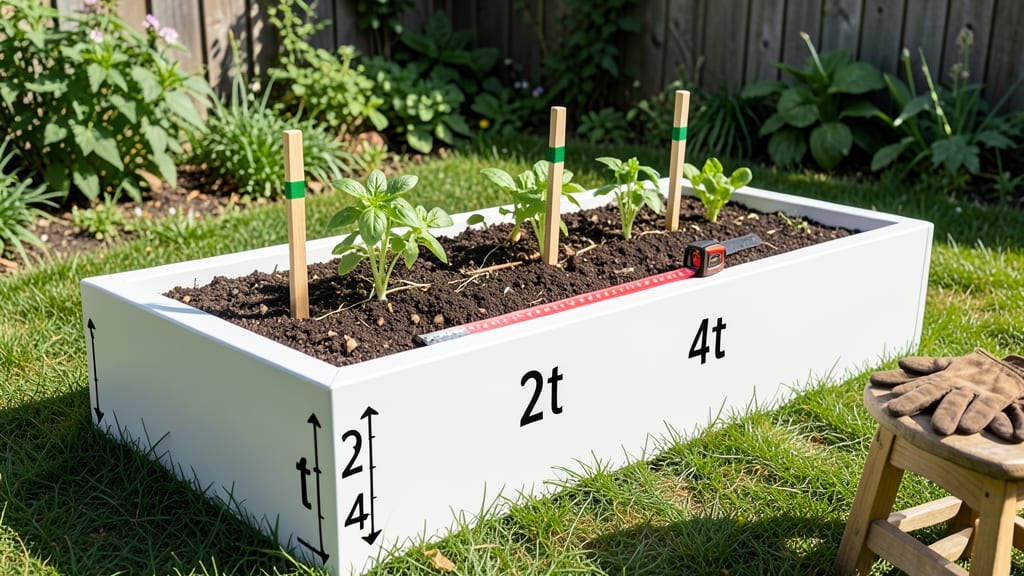
A 4-foot-wide raised bed is the gold standard for a reason—it lets you reach every corner without stepping inside. 🌱 I learned this the hard way after wrestling with a 6-foot bed that left my tomatoes buried in my own shadow.
The ideal width balances accessibility, plant spacing, and ergonomics so you can actually enjoy gardening instead of fighting it.
Narrower beds (2-3 feet) work beautifully for small spaces or beginners, but they require more walking between rows. Wider beds (5+ feet) demand stepping in, which compacts soil and risks trampling plants.
The magic number—4 feet—lets you stand outside while planting, weeding, and harvesting with ease, even for tall varieties like sunflowers or corn.
You’ll notice a difference immediately: less soil compaction, better air circulation, and plants that thrive without the stress of crowded edges. A well-designed 4-foot bed also maximizes growing space while keeping maintenance simple—no more bending awkwardly or reaching past your own shadow.
For small yards or urban gardens, consider 2-foot-wide beds with pathways between them. If you’re working solo, 3-foot beds strike a balance between reachability and efficiency. The key is matching the width to your space, mobility, and the plants you love most.
📚 In This Guide
- What you need
- Instructions
- Tips and common mistakes
- Wrapping up and next steps
What you need
- ● Lumber or building material: Pressure-treated pine, cedar, or composite wood (rot-resistant) – 4–6 pieces, sized to your bed’s length and height (e.g., 2x6 or 2x8 boards, 6–12 inches tall).
- ● Pro tip: Cedar naturally repels pests and lasts longer! 🌲
- ● Corner brackets or screws: 4–8 galvanized screws or brackets (2–3 inches long) for sturdy corners.
- ● Landscape fabric or hardware cloth: 1 roll (to block weeds/rodents if needed).
- ● Soil mix: 2–3 cubic feet per square foot of bed (compost, topsoil, and organic matter blend).
- ● Drill or screwdriver (for assembly).
- ● Measuring tape and pencil (for precision!).
- ● Level (to ensure your bed is even).
- ● Staple gun (if using landscape fabric).
- ● Wheelbarrow or shovel (for soil transport).
- ● Wood stain or sealant (to protect lumber).
- ● Drainage holes (if using containers or elevated beds).
- ● Pathway materials (gravel, pavers) for accessibility.
- ● Drip irrigation kit (for hassle-free watering!).
How to design a raised bed for optimal plant growth and accessibility
Here’s the simple rule I follow: 4 feet wide or less—that’s the magic number for reach and productivity.
📏 Step 1: Measure for the Perfect Width
Standard raised beds should be no wider than 4 feet (48 inches). This width lets you reach the center from either side without stepping inside, which can compact the soil. I always build mine at 3 feet wide—it’s the sweet spot for most gardeners, allowing enough space for tall plants like tomatoes while keeping everything accessible.
If you’re working with a team or have wider spaces, 8 feet is the absolute maximum—but that means you’ll need to build a path down the middle for access. Measure twice before cutting lumber, and mark your dimensions clearly to avoid mistakes. A 4x8-foot bed is the most common size for a reason: it’s easy to build, fits standard lumber lengths, and balances reach with planting space.
✂️ Step 2: Plan Length Based on Your Space
Length is flexible, but 8 feet is ideal for most gardens. This fits standard lumber lengths (like 8-foot 2x6s or 2x8s) and gives you plenty of growing room without overwhelming your space. If your yard is narrow, a 4x4-foot square bed works perfectly for herbs, greens, or small veggies.
For longer beds, consider 12 feet max—any longer, and you’ll struggle to reach the ends without stepping in. If you’re building multiple beds, arrange them in parallel rows with 3-foot-wide paths between them for easy movement. This setup keeps your back happy and prevents soil compaction from walking.
🌱 Step 3: Adjust for Plant Types and Growth Habits
Tall plants like corn, sunflowers, or indeterminate tomatoes need at least 18 inches of space between them, while bushy plants like peppers or lettuce can live happily 12 inches apart. If you’re growing heavy feeders like squash or cucumbers, widen your bed to 5 feet so they have room to sprawl without crowding.
I like to sketch a rough layout before building—this helps me visualize spacing. For example, a 4x8-foot bed can fit four rows of lettuce (12 inches apart) with 18-inch paths between rows for easy weeding. If you’re unsure, start with a 3x6-foot bed—it’s small enough to test spacing without overcommitting.
🪴 Step 4: Build for Accessibility and Soil Health
Raised beds should be at least 6 inches deep for most vegetables, but 12 inches is better for root crops like carrots or potatoes. Use untreated lumber (cedar or redwood lasts longest) and space boards ½ inch apart at the corners to allow for soil expansion. If you’re using composite materials, check the manufacturer’s weight limits—some can’t support heavy loads.
Add cardboard or landscape fabric at the bottom to block weeds but not smother drainage. Fill with a mix of topsoil, compost, and perlite (about ⅓ each) for fluffy, fertile soil. Avoid garden soil—it’s too dense and compacts easily in raised beds. Once built, give the soil a good soak before planting to settle it.
💡 Step 5: Test and Refine for Your Garden
After planting, spend a week moving around the bed. If you find yourself stretching or struggling to reach certain spots, narrow the bed or add a path. I once built a 5-foot-wide bed for tomatoes, only to realize I couldn’t prune the center plants without stepping in—now I stick to 4 feet max. Pay attention to how your body moves in the space.
For slopes or uneven ground, level the base before building. Use gravel or pavers to create a flat foundation if your yard isn’t level. If you’re in a windy area, lower the height to 12 inches max—taller beds can tip over in storms. Once you’ve got the dimensions right, your raised bed will be a low-maintenance, high-yield powerhouse.
Tips & tricks for perfect raised bed dimensions
These practical insights will help you avoid common mistakes and create a raised bed that works beautifully for years.
Reach and Accessibility: The 4-foot maximum width isn't arbitrary—it's based on ergonomics. When you stand with arms extended, most adults can comfortably reach about 24 inches from their body. A 4-foot bed gives you 2 feet on either side (48 inches total), meaning you can reach the center without stepping inside. This prevents soil compaction from walking and makes maintenance effortless. I've found that 3 feet is the sweet spot for most gardeners, giving you extra wiggle room while keeping everything accessible.
Plant Spacing Visualization: Before building, sketch your layout to visualize plant spacing. For example, in a 4x8-foot bed, you can fit four rows of lettuce spaced 12 inches apart with 18-inch paths between rows. This creates a logical flow for planting, weeding, and harvesting. If you're growing tall plants like sunflowers or indeterminate tomatoes, mark their required 18-inch spacing directly on your sketch. I always test-fit my plants by walking through the space—if I can't comfortably reach the center, it's time to adjust the width.
Material and Foundation Considerations: Untreated cedar or redwood lasts longest, but if you're using composite materials, check weight limits—some can't support heavy loads. For uneven ground, level the base with gravel or pavers before building. I once built a raised bed on a slight slope without leveling, and the soil settled unevenly, creating drainage issues. Always space boards ½ inch apart at corners to allow for soil expansion. This small detail prevents warping and extends your bed's lifespan.
Testing Your Design: After planting, spend a week moving around your bed. If you find yourself stretching or struggling to reach certain spots, narrow the bed or add a path. I learned this lesson the hard way when I built a 5-foot-wide bed for tomatoes—pruning the center plants required stepping inside, which compacted the soil. Now I stick to 4 feet max and always test my design before finalizing. This simple step ensures your raised bed will be both functional and enjoyable to use.
Pro Tips for How Wide Should A Raised Bed Be
- These practical insights will help you avoid common mistakes and create a raised bed that works beautifully for years.
- Reach and Accessibility: The 4-foot maximum width isn't arbitrary—it's based on ergonomics. When you stand with arms ...
- Plant Spacing Visualization: Before building, sketch your layout to visualize plant spacing. For example, in a 4x8-fo...
Frequently asked questions
Got questions about raised bed width? You’re not alone! Here are some of the most common concerns—and straightforward answers—to help you plan the perfect setup.
What’s the ideal width for a raised bed to avoid reaching over it?
Aim for 3 to 4 feet wide (36–48 inches). This width lets you stand comfortably in the middle without overreaching. If you’re taller or have mobility needs, 4 feet is even better. Pro tip: Add a path (18–24 inches) between beds to avoid stepping on soil.
Can I make my raised bed wider than 4 feet?
Yes, but only if you’re willing to reach or add a stepping stone. Beds wider than 4 feet (e.g., 6–8 feet) require central access—like a boardwalk or stepping plank—to prevent soil compaction. For most gardeners, narrower is easier!
How does raised bed width affect plant spacing?
Width impacts plant arrangement and sunlight exposure. In a 3–4 ft bed, you can interleave rows (e.g., tall plants on the edges, shorter ones in the middle) for optimal airflow. Wider beds may need staggered planting to ensure all plants get light. Rule of thumb: Leave 12–18 inches between plants for most veggies.
What if my space is limited? Are there alternatives to traditional raised beds?
Try these space-saving options:
- Narrow beds (2–3 ft wide): Perfect for balconies or small yards. Use vertical gardening (trellises) to maximize growth.
- Square foot gardening: Divide a 4x4 ft bed into 1 ft squares for precise plant spacing.
- Hanging or vertical beds: Great for herbs, lettuce, or strawberries in tight spots.
My raised bed is too wide—how can I fix it without rebuilding?
No need to tear it down! Add dividers or partitions (like wooden slats or metal edging) to split it into manageable sections. You can also plant tall crops (like sunflowers) in the center to create natural barriers and improve airflow. Just avoid overcrowding!
Wrapping up and next steps
Choosing the right width for your raised bed isn’t just about aesthetics—it’s about efficiency, accessibility, and plant health. 🌱 Aim for 3 to 4 feet wide to balance ease of reach and optimal growing space, while keeping pathways clear for comfort.
Whether you’re a beginner or a seasoned gardener, the perfect dimensions are just a few measurements away!
Now that you’re armed with the ideal width, roll up your sleeves and start building! Sketch your design, gather your materials, and soon you’ll be enjoying a thriving, easy-to-tend garden. Happy planting! 🌿