
Flowers
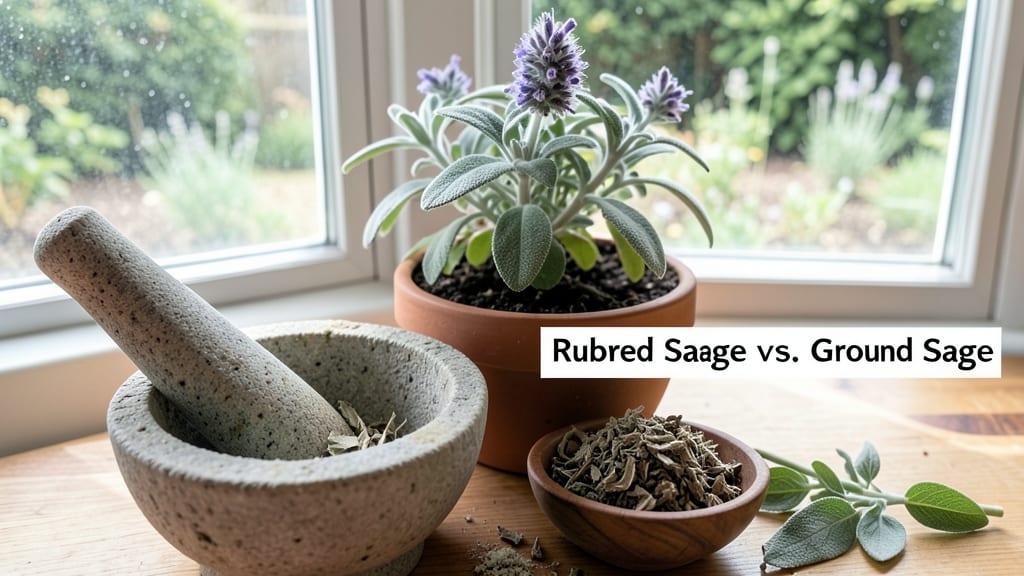
Rubbed sage and ground sage aren’t the same: rubbed sage retains its leaf structure and vibrant green color, offering a fresher, more aromatic flavor, while ground sage is finely powdered and loses some potency over time.
Rubbed sage is made by crushing dried leaves between fingers, preserving their texture and releasing oils gradually for a more complex aroma. 🌿 This whole-leaf version works best in dishes where you want visible greenery and layered flavor, like roasted chicken or garlic bread.
Ground sage, on the other hand, loses its vibrant color and some of its potency quickly, making it ideal for blending into sauces or baked goods where texture isn't a concern.
When choosing between the two, consider your dish's needs: rubbed sage shines in hearty, savory preparations where its visual appeal and gradual release of flavor enhance the experience. Ground sage, while convenient, often requires more of it to achieve the same impact in recipes.
💡 In This Article
- How Rubbing Sage Differs From Ground Sage Processing
- Best Uses for Rubbed Sage vs Ground Sage in Cooking
How rubbing sage differs from ground sage processing
The key difference starts with the physical transformation. Rubbed sage is created by gently crushing dried sage leaves between your fingers, which ruptures the cell walls and releases essential oils while preserving the leaf's structural integrity.
This process creates a textured, leafy form that retains about 70-80% of its original volatile compounds—the aromatic oils responsible for its signature piney, earthy flavor. The leaves stay vibrant green, indicating freshness and potency.
Ground sage, however, undergoes a more aggressive process where the leaves are pulverized into a fine powder using blades or grinding stones. This breaks down the leaf structure completely, exposing all oils at once but also accelerating oxidation.
Studies show ground sage loses about 30-40% of its volatile oils within the first month of storage due to increased surface area exposure. The powder's muted color (often grayish-green) signals this loss of potency.
This processing difference dramatically impacts flavor release. Rubbed sage disperses its oils gradually during cooking, creating a layered aroma that builds over time—ideal for dishes cooked at 350-400°F where heat can slowly extract more flavor.
Ground sage, with its exposed oils, releases flavor immediately but often fades faster, requiring 1.5-2 times the amount to match rubbed sage's impact in recipes.
The texture contrast is equally important. Rubbed sage maintains its leafy form, making it perfect for visual appeal in dishes like roasted meats or stuffings where you want visible greenery.
Ground sage's fine particles blend seamlessly into batters or sauces but can settle unevenly, creating potential texture inconsistencies in baked goods.
Storage requirements reflect these differences too. Rubbed sage keeps its freshness for 6-12 months in airtight containers because the intact leaves protect their oils from oxidation. Ground sage, exposed to air, typically lasts only 3-6 months before losing significant flavor.
The powder's increased surface area also makes it more prone to absorbing moisture and odors from surrounding ingredients.
For home cooks, this means rubbed sage offers more versatility in both flavor development and presentation, while ground sage provides convenience for quick blending where texture isn't a priority.
The choice ultimately depends on whether you prioritize gradual flavor release and visual appeal (rubbed) or immediate dispersion and ease of use (ground).