
Tools
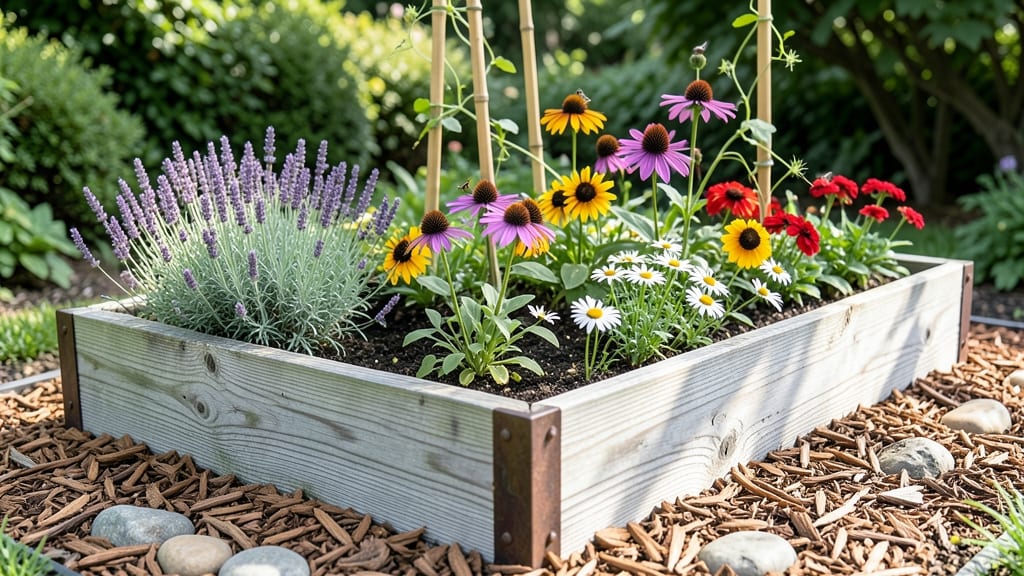
A raised bed flower garden layout creates vibrant displays by organizing plants in vertical layers—tall perennials at the back, mid-height annuals in the middle, and low-spreading flowers at the front—while spacing them 6–18 inches apart for healthy growth and year-round color.
A well-planned raised bed flower garden layout isn't just about aesthetics—it's about maximizing sunlight, airflow, and bloom cycles. 🌸 Tall plants like hollyhocks or delphiniums at the back prevent smaller varieties from being shaded, while mid-height flowers such as zinnias or salvia add mid-season color.
The front row with creeping thyme or petunias creates a lush border that attracts pollinators. I've found that spacing plants according to their mature size reduces competition for nutrients and water, ensuring each variety thrives.
For continuous blooms, I recommend mixing early, mid, and late-season flowers—like tulips in spring, dahlias in summer, and chrysanthemums in fall. This layered approach keeps your garden vibrant all year while making the most of your raised bed's limited space.
The key is balancing height, sunlight needs, and bloom times to create a dynamic, low-maintenance display.
💡 In This Article
- Designing a Thriving Raised Bed Flower Layout by Sunlight and Season
- Best Flower Spacing Guidelines for Raised Beds by Plant Type
Designing a thriving raised bed flower layout by sunlight and season
Sunlight is the foundation of any successful raised bed flower garden, and understanding your plants' light requirements is critical. Most annuals and perennials thrive in 6-8 hours of full sun daily, while shade-tolerant varieties like impatiens or ferns need only 2-4 hours.
In my experience, grouping plants with similar sunlight needs together prevents leggy growth or weak blooms. For example, sun-loving lavender and coneflowers should occupy the southern side of the bed, while shade-loving hostas and astilbes belong on the northern side where morning sun is gentler.
The vertical layering technique works because taller plants like delphiniums (3-5 feet) or bee balm (2-4 feet) at the back create a natural windbreak, protecting smaller varieties from drying out.
Mid-height flowers such as zinnias (1-3 feet) or salvia (2-3 feet) form the middle tier, while low-growing annuals like petunias (6-12 inches) or creeping thyme (3-6 inches) complete the front edge.
This arrangement mimics natural ecosystems, where each layer serves a purpose—tall plants catch wind, mid-height varieties provide habitat, and ground covers prevent erosion.
Seasonal bloom cycles are what keep your garden vibrant year-round. I've found that pairing early bloomers like tulips (spring) with mid-season favorites such as black-eyed Susans (summer) and late-season stars like chrysanthemums (fall) creates a continuous color show.
For example, in a 4'x8' raised bed, you might dedicate one corner to spring bulbs, another to summer annuals, and the final section to fall perennials. This staggered approach ensures you're never without blooms, while also allowing you to rotate plants annually to prevent soil depletion.
What most gardeners overlook is how plant placement affects airflow—a critical factor in disease prevention. Crowding plants too closely creates a humid microclimate that encourages fungal issues like powdery mildew. I recommend leaving at least 6 inches between plants for good airflow, but this varies by variety.
For instance, lavender needs 18-24 inches of space to prevent root competition, while marigolds can thrive just 6-12 inches apart. Strategic spacing also makes maintenance easier—you can reach between plants to weed or harvest without disturbing the roots.
Consider this practical example: In a 4'x4' raised bed, place three hollyhock plants (24" spacing) at the back, surrounded by six salvia plants (12" spacing) in the middle, and edge with eight petunia plants (6" spacing) in the front.
This creates a balanced look while ensuring each plant has room to reach its mature size. The hollyhocks provide height, the salvia adds mid-season color, and the petunias spill over the edge for a finished look. 🌸
For shade gardens, opt for heuchera (12-18" spacing) and fuchsia (12-18" spacing) in the back, with impatiens (6-10" spacing) and begonias (6-12" spacing) in the front. These varieties thrive in 30-50% shade and still provide vibrant blooms.
The key is matching plant habits to your bed's light conditions—what works in full sun will struggle in deep shade and vice versa.