
Vegetables
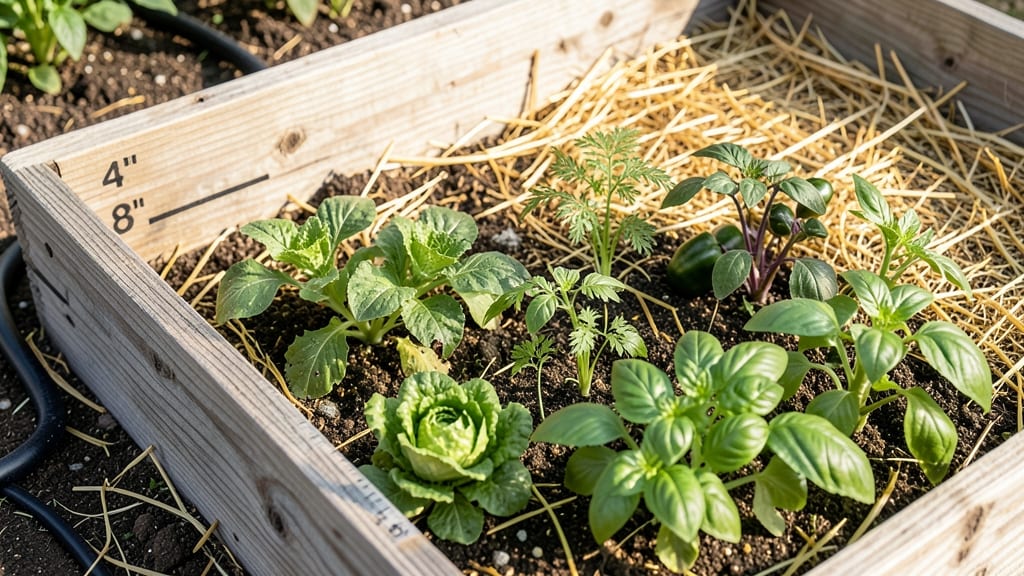
Raised bed height for vegetables should ideally range between 6 to 12 inches deep, accommodating most root systems while ensuring accessibility for planting and maintenance. Deeper beds (12–18 inches) suit root crops like carrots or potatoes, while shallower beds (6–8 inches) work for leafy greens and herbs.
When planning your vegetable garden, the right bed height isn't just about root space—it's about balancing plant needs with your comfort. 6-inch beds work perfectly for shallow-rooted plants like lettuce or radishes, while 12-inch beds give deeper-rooted varieties like tomatoes or peppers room to thrive.
The extra height also makes weeding and harvesting easier on your back, especially if you're working with knee or waist-level designs. 🌱
What many gardeners overlook is how bed height affects soil quality over time. Deeper beds (12–18 inches) help prevent soil compaction and improve drainage, which is critical for heavy feeders like potatoes.
Meanwhile, shallower beds (6–8 inches) are ideal for moisture-sensitive crops like herbs, where excess depth could lead to waterlogging. The key is matching your bed's depth to both your plants' growth habits and your own physical needs.
💡 In This Article
- How Root Depth Determines Optimal Raised Bed Vegetable Heights
- Accessibility and Practical Considerations for Raised Vegetable Beds
How root depth determines optimal raised bed vegetable heights
Root systems vary dramatically between vegetable types, and this directly influences the ideal bed height. Shallow-rooted plants like lettuce, spinach, or radishes thrive in beds just 6 inches deep, since their roots rarely exceed 4-6 inches in length.
These crops prioritize rapid growth and leaf production over deep penetration, making deeper beds unnecessary—and potentially wasteful of soil resources. Meanwhile, deep-rooted vegetables like carrots, potatoes, or tomatoes need 12-18 inches of soil to develop fully, as their roots can extend 12-24 inches downward to access water and nutrients.
The science behind this lies in soil aeration and nutrient distribution. Deeper beds (12+ inches) prevent root competition by creating vertical space, which is crucial for heavy feeders like sweet potatoes whose tubers need 10-12 inches of loose soil to expand without deforming.
Shallow beds (6-8 inches) work perfectly for herbs and greens because their fibrous root systems spread horizontally rather than vertically. 🌱 What's fascinating is how this depth also affects microbial activity—deeper soils retain more organic matter, supporting beneficial fungi and bacteria that break down nutrients more efficiently for deep-rooted plants.
Drainage is another critical factor tied to root depth. Shallow beds dry out faster, which benefits moisture-sensitive crops like basil or cilantro, while deeper beds prevent waterlogging that can rot shallow roots.
For example, a 6-inch bed for lettuce might need watering every 2-3 days in summer, whereas a 12-inch bed for tomatoes could go 5-7 days between waterings due to better moisture retention.
This is why many gardeners use 8-10 inches as a compromise height—it accommodates most vegetables while balancing water needs.
Consider the texture difference: shallow beds (6 inches) have a more uniform, loose soil structure ideal for seed germination, while deeper beds (12+ inches) require careful layering to prevent compaction.
For instance, a 12-inch bed might start with 4 inches of compost-rich topsoil, followed by 4 inches of garden soil, and 4 inches of sand or gravel for drainage at the bottom.
This stratification mimics natural soil layers, giving deep roots the stability they need to anchor while preventing the soil from becoming too dense.
One common mistake is assuming "taller is always better." While deep beds excel for root crops, they can actually hinder shallow-rooted plants by creating excess moisture near the surface.
For example, a 16-inch bed for radishes (which only need 3-4 inches of soil) might lead to rot if the upper layers stay too wet. The solution? Use dividers or modular beds to create zones of different depths within the same garden layout.
For visual clarity, imagine this comparison: a 6-inch bed is like a shallow pond where water lilies thrive, while a 16-inch bed is more like a deep lake where koi fish can swim freely.
The right depth ensures your vegetables grow with the space they naturally demand, maximizing both yield and health. 💫