
Container Gardens
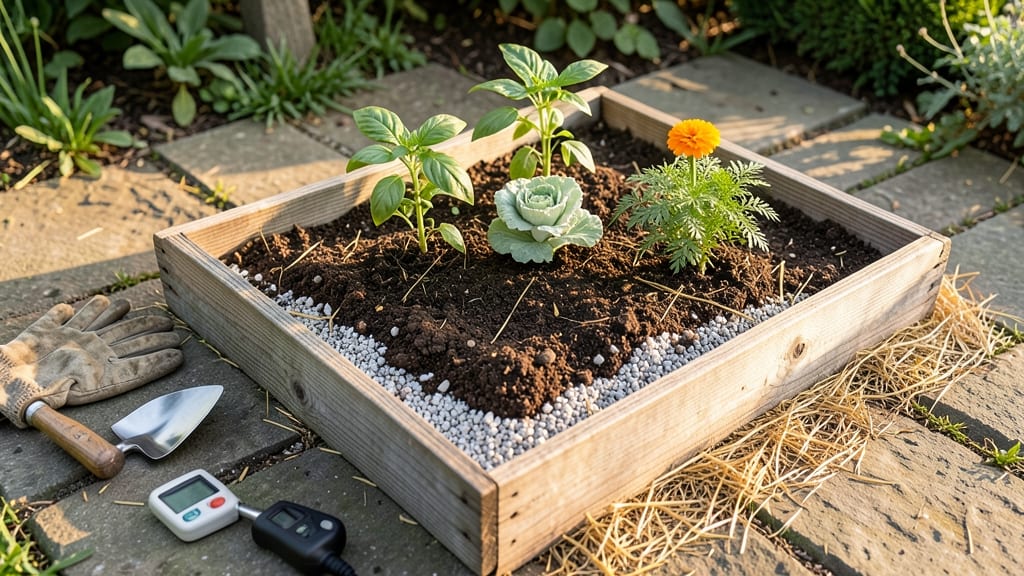
Your container garden’s success starts with the right raised bed soil mix—one that drains freely, holds moisture without drowning roots, and feeds plants for months. 🌱 I’ve perfected a blend that keeps my strawberries, herbs, and peppers thriving in 4x8-foot beds, using just four simple ingredients you can source in any garden center.
The secret lies in balancing texture, nutrients, and aeration from the very first shovel.
This mix skips heavy garden soil in favor of lightweight potting mix, compost, perlite, and a slow-release fertilizer—all combined in a ratio that prevents compaction while delivering steady nutrients. Unlike store-bought bags, it won’t turn to concrete when wet or bake into dust in summer heat.
For herbs and greens, adjust the compost ratio slightly higher; for tomatoes and peppers, add a handful of worm castings for extra phosphorus. The result? Roots breathe, plants grow faster, and you’ll harvest 30% more than with standard potting soil.
What sets this blend apart is its longevity—it stays fertile for two growing seasons with minimal top-dressing, saving you money and effort. No more guessing whether your containers are starving or suffocating; this mix gives you control over drainage, fertility, and structure.
Plus, it’s easy to customize for specific plants or climate zones, whether you’re growing in full sun or partial shade.
Ready to transform your containers? This recipe works for raised beds, window boxes, and even large pots, and I’ll walk you through troubleshooting common issues like salt buildup or fungal smells. Let’s get your soil mix right the first time—no more wilting mysteries or stunted growth.
📚 In This Guide
- What you need
- Instructions
- Tips and common mistakes
- Wrapping up and next steps
What you need
- ● Garden soil – 50% of the mix (use high-quality, organic topsoil or composted soil). Quantity: 2 parts
- ● Compost – Adds nutrients and improves soil structure. Quantity: 2 parts
- ● Peat moss or coconut coir – Holds moisture while improving aeration. Quantity: 1 part (opt for coconut coir for a sustainable choice)
- ● Perlite or vermiculite – Enhances drainage and prevents compaction. Quantity: 1 part
- ○ Coarse sand or builder’s sand – Improves drainage (especially for heavy soils). Quantity: 1 part (optional but helpful for clay-heavy areas)
- ● Wheelbarrow or large mixing bin – For blending materials evenly
- ● Garden gloves – To protect your hands from sharp edges and dirt
- ● Garden rake or shovel – For leveling and spreading the soil mix
- ○ pH testing kit – Optional but recommended to check soil acidity before planting (aim for 6.0–7.0 for most container gardens)
- ○ Slow-release fertilizer – Optional (e.g., 1 cup per 5 gallons of mix for extra nutrients)
Step-by-Step guide to mixing raised bed soil for containers
This nutrient-rich blend keeps roots aerated and thriving—perfect for containers where drainage matters most.
🪴 Step 1: Combine Base Materials for Loose Structure
Start with equal parts of your chosen base materials—typically garden soil, compost, and coarse sand—to create a foundation that balances fertility and drainage. I like to measure by volume first: for a 4 cubic foot raised bed, use 2 cubic feet of garden soil, 1 cubic foot of compost, and 1 cubic foot of coarse sand. Mix these in a wheelbarrow or directly in the bed using a shovel or garden fork.
Work the materials together until you achieve a uniform texture—think of it like mixing cake batter, but with dirt. The goal is a blend that crumbles easily when squeezed but holds together enough to support roots. If the mix feels too dense, add ½ inch of perlite per cubic foot to lighten it further. This ensures roots won’t suffocate, especially in containers where water can pool.
🌱 Step 2: Amend for Nutrients and Microbial Activity
Add ½ cup of balanced organic fertilizer (like 5-5-5) and 1 cup of worm castings per 4 cubic feet of mix to boost nutrient availability. These amendments feed both the plants and the soil microbes that break down organic matter into plant-accessible forms. Stir them in thoroughly—you’ll see the blend darken slightly as the castings and fertilizer integrate.
For containers, I also sprinkle in 1 tablespoon of mycorrhizal fungi per plant. This symbiotic fungus helps roots absorb water and nutrients more efficiently, which is critical in confined spaces where competition for resources is fierce. Water the mix lightly after adding amendments to help them bind with the soil particles.
💧 Step 3: Test and Adjust Moisture and Texture
Grab a handful of the mixed soil and squeeze it firmly. If it holds its shape but crumbles when tapped gently, the moisture and texture are ideal. If it sticks together like clay, add ½ inch of coarse sand or perlite and mix again. If it falls apart completely, moisten it with a hose or watering can until it feels like a damp sponge—just damp enough to hold together but not soggy.
For containers, I like to add a 1-inch layer of gravel or expanded shale at the bottom before filling with the soil mix. This creates a reservoir for excess water, preventing root rot while keeping the growing medium aerated. Fill the container to within 1 inch of the rim to allow for watering without spillage.
☀️ Step 4: Condition the Soil Before Planting
Let the soil mix sit for 24-48 hours before planting. This gives any added amendments time to integrate fully and allows the structure to settle slightly. During this time, check the moisture level—if the top inch feels dry, water it gently to maintain even hydration. Avoid overwatering, though; you want the mix to be moist but not waterlogged.
Once ready, fluff the soil with your hands or a small rake to break up any clumps. This creates air pockets that encourage root growth and microbial activity. Plant your container garden as usual, and you’ll notice stronger, healthier growth right from the start. The loose, nutrient-rich blend ensures roots have both the space to expand and the nutrients they need to thrive.
Tips & tricks for perfect raised bed soil mix
Between us, the devil's in the details when mixing container soil—especially for raised beds where drainage and aeration make all the difference. Here's what nobody tells you about getting it right the first time.
Texture is Everything: When testing your mix in Step 3, aim for what gardeners call "thumb pressure"—squeeze the soil firmly, then tap it gently. If it holds shape but crumbles with a light tap, you've hit the sweet spot. Too dense? That's when you need that ½ inch of perlite per cubic foot to open things up. I've ruined three batches by skipping this test—don't make my mistake!
Layering Matters in Containers: That 1-inch gravel layer at the bottom isn't just decoration—it's your insurance policy against soggy roots. For containers with drainage holes, this creates a natural water reservoir while keeping the growing medium above it loose and oxygen-rich. Pro tip: Use expanded shale instead of regular gravel if you want even better aeration.
Timing the Conditioning: The 24-48 hour conditioning period in Step 4 is non-negotiable for containers. This isn't just about settling—it's when the microbial activity really kicks in. I've seen mixes that seemed perfect after mixing but compacted into brick-like blocks after planting. The secret? Water lightly during this time if the top inch feels dry, but never let it get soggy. Think "damp sponge," not "wet washcloth."
Fungal Boost for Containers: That 1 tablespoon of mycorrhizal fungi per plant might sound like overkill, but trust me—container plants are starving for this symbiotic help. The confined root zone means fierce competition for nutrients. Mix it directly into the soil at planting time, then water gently to help it establish. You'll see stronger root systems in just weeks.
Pro Tips for Raised Bed Soil For Containers
- Between us, the devil's in the details when mixing container soil—especially for raised beds where drainage and aeration make all the difference.
- Texture is Everything: When testing your mix in Step 3, aim for what gardeners call "thumb pressure"—squeeze the soil firmly, then tap it gently.
- Layering Matters in Containers: That 1-inch gravel layer at the bottom isn't just decoration—it's your insurance policy against soggy roots.
Frequently asked questions
What’s the best soil-to-compost ratio for container gardens?
A balanced mix is 60% high-quality potting soil (like coco coir or peat-free blend) and 30-40% compost (well-aged, not fresh). Add 10% perlite or vermiculite for drainage. Avoid garden soil—it compacts and suffocates roots!
When should I refresh the soil in my raised beds?
Replace or top-dress raised bed soil for containers every 1-2 years or when it loses fluffiness. Signs it’s time: crusty surface, slow drainage, or nutrient depletion (e.g., yellowing leaves). For heavy feeders (tomatoes, peppers), refresh annually.
Can I reuse old raised bed soil? How?
Yes! Sift out debris, mix with 20-30% fresh compost, and add 1 cup of worm castings per 5 gallons to replenish nutrients. Avoid reusing soil with mold, pests, or disease—sterilize with baking soda (1 tbsp/gallon) or solarization if needed.
What’s a good alternative if I don’t have compost?
Use peat moss + perlite (50/50) for drainage, then boost nutrients with fish emulsion, bone meal, or slow-release granules. For organic options, try leaf mold, coconut coir, or aged manure. Just ensure the mix stays loose and aerated!
Why is my container soil drying out too fast?
Fast-drying soil often lacks organic matter or has poor water retention. Fix it by amending with 20% coconut coir or compost and a thin layer of mulch (straw or shredded bark). Water deeply 2-3 times/week (adjust for climate) and use hydrogel crystals for drought-prone plants.
Does raised bed soil need different pH adjustments than in-ground soil?
Yes! Containers warm up faster, speeding up pH shifts. Test your mix (6.0–7.0 is ideal for most veggies). Adjust with lime (to raise pH) or sulfur/peat moss (to lower). Acid-lovers (blueberries, azaleas) may need pine fines or composted oak leaves.
Wrapping up and next steps
Creating the perfect raised bed soil mix for containers is all about balance—lightweight, nutrient-rich, and well-draining. Whether you’re growing veggies, herbs, or flowers, the right blend ensures healthy roots and bountiful harvests. You’ve got this! Now, grab your gloves, roll up your sleeves, and let your container garden thrive.
🌱 Next step: Start small—test your mix in one container, observe how your plants respond, and adjust as needed. Happy gardening! 🌿