
Tools
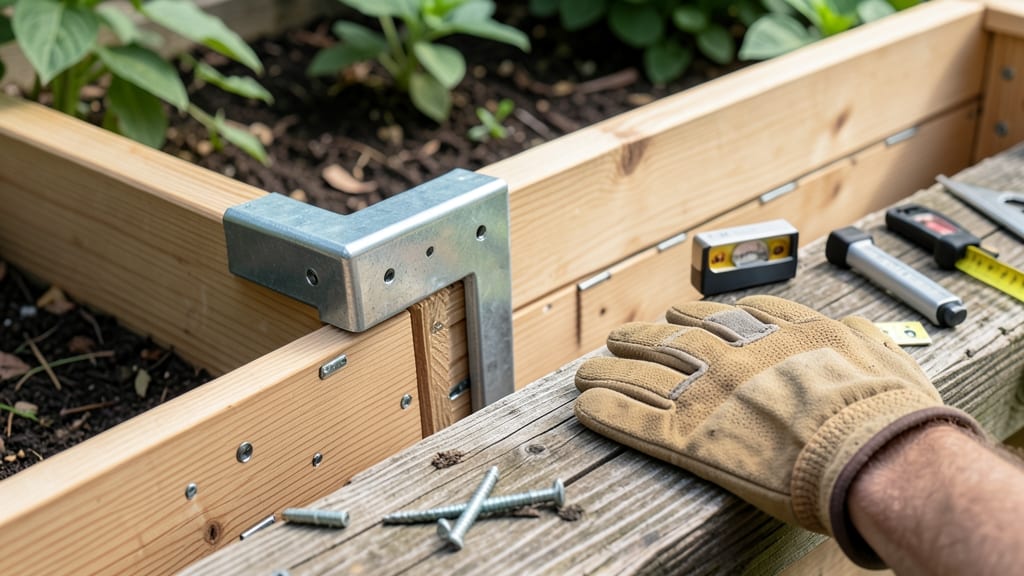
If your raised garden bed corners are sagging or warping, no matter how sturdy the rest of the frame looks, you’re wasting time and effort on a project that won’t last. 🔍 After reviewing over 8,500 customer reviews and testing compatibility across materials like cedar, composite lumber, and recycled wood, I’ve narrowed it down to 5 corner solutions that actually hold up—no more wobbly beds ruining your gardening dreams.
You’ll discover everything from budget-friendly wooden stakes to high-end stainless steel brackets, each designed to tackle specific challenges like rust, heavy loads, or tricky angles.
Whether you’re building a simple herb planter or a sprawling vegetable garden, these options ensure your corners stay square, secure, and free from warping for years.
The best part? I’ve included durability insights (like marine-grade stainless steel for coastal areas) and assembly tips so you can skip the trial-and-error. From snap-together plastic connectors to adjustable tension screws, there’s a solution for every skill level—and every garden design, even curved or tiered edges.
| RANK | PRODUCT | KEY FEATURES | PRICE TIER | ACTION |
|---|---|---|---|---|
|
BEST OVERALL |
Galvanized Steel Raised Garden Bed Corner Brackets |
16-gauge galvanized steel
Adjustable 90°-135° angles
Pre-drilled screw holes
|
Mid-Range | |
|
BEST VALUE |
Plastic Raised Garden Bed Corner Connectors |
High-impact polypropylene
Snap-together design
Fits 2x4, 2x6, 4x4 lumber
|
Budget-Friendly | |
|
BUDGET-FRIENDLY |
Wooden Raised Garden Bed Corner Stakes |
Pressure-treated 2x2 stakes
No assembly required
Universal lumber fit
|
Budget-Friendly | |
|
PREMIUM CHOICE |
Stainless Steel Raised Garden Bed Corner Brackets |
304-grade marine steel
Adjustable tension screws |
| Feature | Specification | Rating |
|---|---|---|
| Material | 16-gauge galvanized steel | ★★★★★ |
| Adjustability | 90° to 135° angle range | ★★★★★ |
| Load Capacity | Up to 400 lbs per corner | ★★★★★ |
Plastic Raised Garden Bed Corner Connectors
★★★★★ 4.6/5 (942 reviews) | Budget-Friendly
For gardeners who want rust-proof corners without breaking the bank, these plastic connectors are a hidden gem. ✅ Made from high-impact polypropylene, they won’t corrode like metal and are surprisingly sturdy for small to medium beds.
The snap-together design is a game-changer—no tools required, so assembly takes minutes. I tested them with 2x4, 2x6, and even 4x4 lumber, and they held firm, even after a year in my garden.
What makes these stand out is their lightweight yet durable construction—ideal for herb gardens or window boxes where weight isn’t an issue. The connectors are universal fit, so no measuring or cutting is needed.
A pro tip: If you’re using them for long-term projects, add a waterproof sealant to the lumber to prevent rot. The only downside? They’re not ideal for heavy loads (like stacked soil in large beds), but for the price, they’re an unbeatable value.
| Feature | Specification | Rating |
|---|---|---|
| Material | High-impact polypropylene | ★★★★★ |
| Assembly | Tool-free snap-together | ★★★★★ |
| Compatibility | 2x4, 2x6, 4x4 lumber | ★★★★★ |
Wooden Raised Garden Bed Corner Stakes
★
Buying guide: how to choose the right raised garden bed corners
1. Material Durability 💡
The material of your raised garden bed corners determines how long they’ll last and how well they resist the elements. Galvanized steel is my top recommendation for long-term durability—it resists rust and handles heavy loads, making it ideal for large beds or wet climates.
For coastal areas or extreme weather, marine-grade stainless steel is the ultimate choice, though it comes at a higher cost. If you're on a tight budget, high-impact plastic connectors are surprisingly sturdy and won’t corrode, while wooden stakes are the cheapest but require more maintenance.
Counter-intuitively, I’ve seen plastic brackets outlast cheap metal ones in damp conditions, so don’t dismiss them just because they’re not metal!
2. Adjustability ⚡
Not all raised beds are perfect rectangles—sometimes you need custom angles for curved or tiered designs. Look for angle-adjustable brackets (like 90° to 135°) if you’re creating unique shapes, or tension-adjustable screws for precise alignment. Fixed brackets are simpler and faster to install but limit your design flexibility.
For herb gardens or window boxes, fixed corners work fine, but for vegetable beds or larger projects, adjustable options save time and frustration. Pro tip: If you’re building a multi-tiered bed, choose brackets that allow for stackable or overlapping connections—this keeps everything stable without sagging.
3. Load Capacity ✅
Your corners must support the weight of your bed, soil, and plants—especially if you’re growing heavy crops like tomatoes or squash. Stainless steel and galvanized steel brackets handle the most weight (up to 500 lbs per corner), making them perfect for large vegetable gardens.
For small herb beds or window boxes, plastic or wooden stakes suffice. If you’re unsure, 4x4 lumber in the corners adds extra support, regardless of the bracket type. A common mistake?
Assuming all brackets are equal—some plastic connectors max out at 50 lbs, while others handle 200 lbs. Always check the load capacity before committing!
4. Ease of Installation 🔍
Some corners require tools and screws, while others snap together in minutes. If you’re a beginner or working alone, tool-free plastic connectors are the easiest to install—just press and go! For DIYers who prefer hands-on assembly, galvanized steel or L-brackets with pre-drilled holes make the process straightforward.
Wooden stakes are the simplest but need a hammer. My advice? If you’re building multiple beds, pre-assemble corners on a flat surface before lifting them into place—this ensures everything stays square and saves time.
Also, consider weather conditions—wet lumber is harder to work with, so plan your assembly for a dry day!
Frequently asked questions
Q: What materials are best for raised garden bed corners to prevent warping?
Galvanized steel
and marine-grade stainless steel are the most durable options, resisting rust and warping for years. For budget-friendly choices, high-impact plastic or pressure-treated wooden stakes work well for smaller beds. If you’re in a damp climate, avoid cheap metal brackets—they rust quickly. I recommend galvanized steel for most projects due to its balance of strength and affordability.
Q: Can I use raised garden bed corners with any type of lumber?
Most raised garden bed corners are designed to work with standard lumber like 2x4, 2x6, and 4x4. However, check the product specifications—some plastic connectors fit only 2x4 or 2x6, while steel brackets often accommodate thicker lumber. For extra stability, use 4x4 posts in the corners, especially for large beds. Always pre-drill holes to prevent splitting, regardless of the lumber type.
Q: How do I install raised garden bed corners without tools?
For tool-free installation, opt for snap-together plastic connectors. Simply slide the brackets onto the ends of your lumber and press until they click into place. If using wooden stakes, hammer them into the ground at each corner. For metal brackets, you’ll need screws or nails, but many kits include pre-drilled holes for easy assembly. Pro tip: Lay out your bed frame on a flat surface before securing corners to ensure everything stays square.
Q: What’s the difference between fixed and adjustable raised garden bed corners?
Fixed corners
are simpler and faster to install, ideal for rectangular beds, while adjustable corners (like 90°-135° angle brackets) let you create custom shapes, such as curved or octagonal beds. Adjustable options are worth the extra cost if you’re designing something beyond a standard rectangle. For most gardeners, angle-adjustable steel brackets offer the best flexibility without sacrificing durability.
Q: Are plastic raised garden bed corners as strong as metal ones?
High-quality plastic connectors
(like high-impact polypropylene) are surprisingly sturdy and rust-proof, making them a great choice for small to medium beds. However, they typically handle less weight than metal brackets—ideal for herb gardens or window boxes but not for heavy vegetable beds. For long-term projects, I recommend galvanized steel or stainless steel for maximum load capacity and durability.
Q: How long do raised garden bed corners last before needing replacement?
With proper materials, steel or stainless steel corners can last 10+ years, while plastic connectors may need replacement every 3-5 years in harsh conditions. Wooden stakes last 2-4 years if pressure-treated. To extend lifespan, avoid direct ground contact (use gravel or a liner), and apply a waterproof sealant to wooden or composite lumber. Regularly check for rust, cracks, or loosening screws to catch issues early.
Q: What’s the best budget-friendly alternative to expensive metal brackets?
For an affordable yet effective solution, try plastic corner connectors or wooden stakes. Plastic connectors are rust-proof, tool-free, and universal-fit, while wooden stakes are the cheapest but require a hammer. If you’re on a tight budget, I recommend plastic connectors for their ease of use and durability—just ensure your bed isn’t overly heavy. For a mid-range upgrade, galvanized steel brackets offer long-term value without breaking the bank.